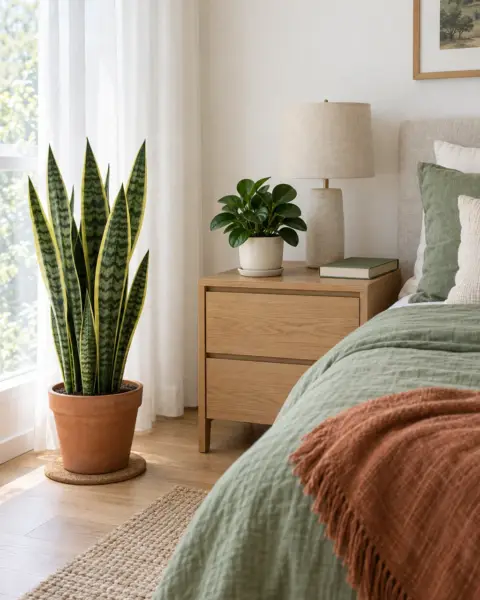
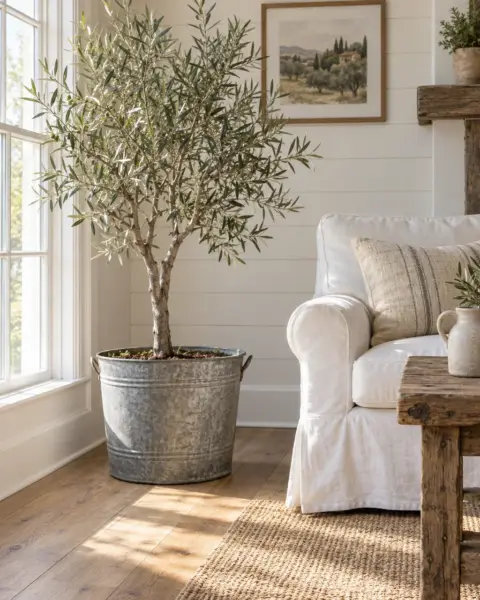
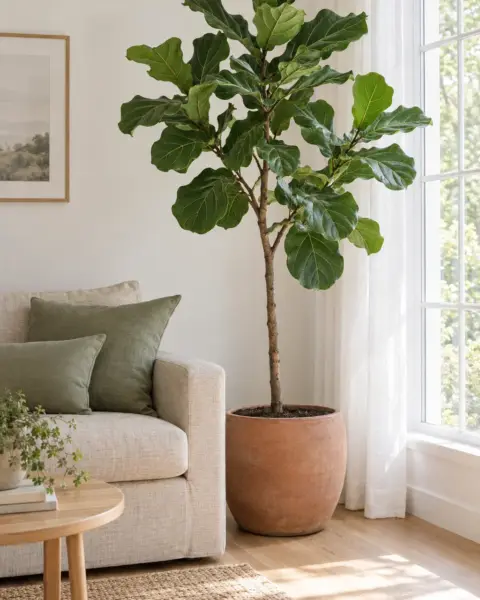
A row of pots lined up on the floor rarely looks the way it did in your head. The plants sit below the windowsill, the leaves stretch toward the glass, and the corner still feels empty at eye level. Good plant stand decor fixes both problems: it lifts plants into better light and gives the room some height.
The catch is choosing a stand for the spot you actually have. Below are wooden, metal, tiered and DIY ideas, each matched to the light it suits, plus how to pick a sturdy stand and arrange plants at different heights.
Plant stand decor starts with your window, not the stand
Light drops off much faster than your eyes suggest. Nebraska Extension puts it this way: if a south window gives 100% light intensity, east and west windows give about 60% and a north window about 20%, and moving a plant just a little farther from the glass cuts its light very quickly. That’s why University of Kentucky Extension agents suggest putting floor plants on a stand to bring them closer to the window. A pot on the floor sits below the sill. On a stand, its leaves reach the glass.
Before you shop, note which way the window faces and how far your spot is from it. Illinois Extension’s light guidelines give a handy rule of thumb:
- Medium light: directly in front of a north window, a few feet from an east or west window, or 3 to 10 feet from a south window.
- Bright light: directly in front of an east or west window, or within about 5 feet of a south window.
- Direct sun: right in front of a south window.
Seasons matter too: a plant that thrives in an east window in summer may need a south window in winter.
How to choose a plant stand that won’t wobble, stain or tip
The most common plant stand complaints are wobbly legs, rusty metal and water rings on wood. All are easier to prevent than to fix.
Weigh your heaviest pot before you compare stands
Put your largest potted plant on a bathroom scale right after watering, when the soil is heaviest, and compare that number with the stand’s rating per shelf, not the total for the whole unit. Then set the pot on the stand and give it a gentle rock. If it tips or spins, you need a wider top or base, not a folded napkin under one leg.
Match the height to the plant and the furniture around it
Trailing plants need enough height for their vines to hang free. Upright plants usually look best when the top of the foliage lands near the windowsill or just above the arm of a nearby sofa. Measure the gap you want to fill, plant included, before you buy.
Protect wood shelves and floors from water
Put a saucer under every pot with a drainage hole, and empty it after watering. Skip unglazed clay saucers on wood: University of Minnesota Extension notes that clay can turn damp and damage the wood underneath. A glazed or plastic saucer avoids the problem, or slip a coaster under the clay one.
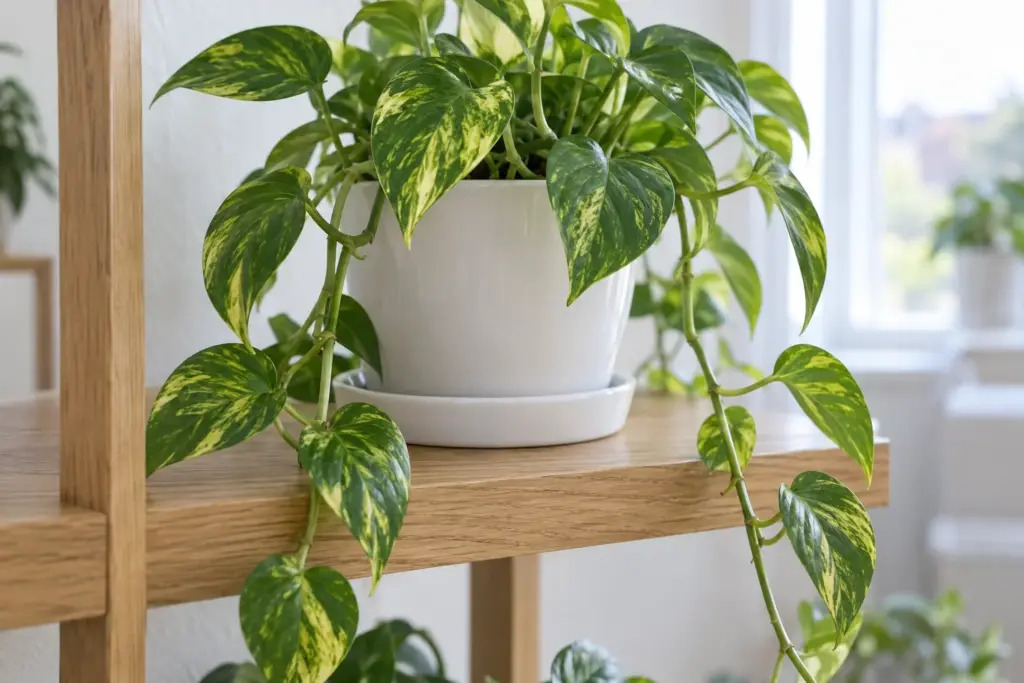
Wooden plant stands for a warm, natural look
Wood is the easy match for terracotta, linen, rattan and sage green walls. Picture a mid-century stand with tapered legs holding a single 8-inch pot beside an east window, or a slim bamboo ladder stand filling the narrow wall next to a bookcase.
For an east or west window, think medium-light plants with a soft outline. A spider plant (Chlorophytum comosum) looks better raised than on the floor because its arching leaves and dangling plantlets get room to fall. A Boston fern (Nephrolepis exaltata) suits a pedestal stand in the same kind of light; extension light lists place both in the medium range.
A sealed or oiled stand handles the odd drip far better than raw wood. Lift the saucer once a month to check for dark rings.
Metal plant stands for slim, modern spaces
Thin black iron or brass-toned legs take up very little visual space, which helps next to a sleek sofa, a glass desk or a tight gap between two windows. Rust is one of the problems owners mention most with cheaper metal stands, so a powder-coated finish is worth looking for.
Metal stands shine in your sunniest spot. University of Maryland Extension places succulents and cacti where they get 4 to 6 hours of direct sun, like an unshaded south window, and lists jade plant and hoya among plants for south or west windows. A cluster of small succulents on a black wire stand right at the glass reads clean and graphic, and wire shelves let a little light through to the plants below.
Tiered plant stands and ladder shelves for small apartments
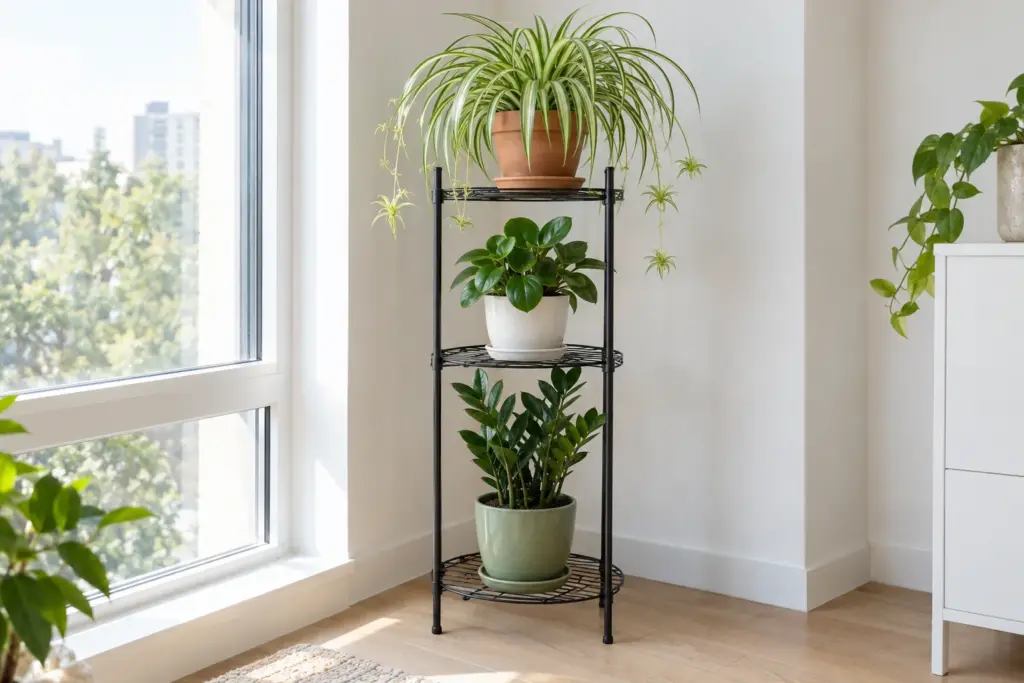
A tiered plant stand holds a whole collection on the footprint of a side table. The trade-off is shade: each shelf blocks some light from the one beneath, and the bottom shelf sits below the brightest part of the window.
Plan the tiers by light:
- Top shelf: medium-light plants, or a trailing pothos (Epipremnum aureum) whose vines can spill down the front. Pothos tolerates low light, but variegated types lose much of their color without enough of it.
- Middle shelves: compact plants like peperomia.
- Bottom shelf: low-light-tolerant plants such as ZZ plant (Zamioculcas zamiifolia), snake plant or heartleaf philodendron.
Weight works the other way. The U.S. Consumer Product Safety Commission advises storing heavier items on lower shelves and anchoring tall shelving to the wall in homes with young children, and a loaded ladder stand counts. Keep big ceramic pots low and save the top for light plastic nursery pots inside a cover pot.
Water poured into a top pot can also run straight onto the leaves below, so carry top-tier plants to the sink or give each pot its own saucer.
DIY plant stand ideas you can put together in an afternoon
- A wooden step stool or sturdy side stool lifts one medium pot and looks natural next to a reading chair.
- Two or three wooden crates turned on their sides and screwed together make a low shelf with cubbies. Seal raw wood with a water-resistant finish first.
- A solid board on hairpin legs becomes a long, low plant bench under a wide window.
- A large terracotta pot turned upside down works as a short pedestal for a smaller pot.
Keep anything you build low unless you can anchor it, and test it with your heaviest wet pot before styling.
How to arrange plants at different heights
Stagger heights so no plant shades another
Put shorter plants closest to the glass and taller ones behind or beside them. A simple slope works well: a tall upright plant on the floor or a low stand, a bushy plant at mid-height, and a trailing plant on the highest point so its vines soften the edge.
Group plants with similar needs
Illinois Extension notes that grouping plants raises the humidity right around them, and Iowa State Extension calls it an easy way to do so. It simplifies care, too: a fern and a spider plant can share a shelf and a watering routine, while succulents belong together on their own sunny stand.
Mix leaf shapes, repeat materials
Set broad, glossy leaves next to fine fronds, and upright blades beside a trailing vine. Then calm the mix by repeating one pot material across your stands, such as terracotta on every shelf. Leave a few inches between pots so leaves aren’t crushed and air can move.
Care notes for plants on stands
- Turn the pots. Rotate each one every week or two so all sides get light.
- Watch the seasons. In winter, keep leaves off cold glass and keep stands away from heating vents and radiators, as Illinois Extension’s houseplant care page recommends. In summer, too much direct sun can turn leaves pale, then brown, so pull medium-light plants back or add a sheer curtain.
- Think about pets. A stand won’t stop a determined cat. Check every plant on the ASPCA toxic and non-toxic plant list: pothos is listed as toxic to cats and dogs, while spider plant and Boston fern are listed as non-toxic.
- Stuck with a dark corner? Read up on adding supplemental light to a dim spot before you style it.
Plant stand questions about height, weight and light
Which plants work best for plant stand decor in a low-light room?
ZZ plant, snake plant, pothos and heartleaf philodendron all tolerate low light, so they’re the safest choices. Low light still means some daylight: Illinois Extension describes it as a few feet from a north window or 3 to 10 feet from an east or west window. Save succulents and cacti for your sunniest window.
How tall should a plant stand be?
For an upright plant, tall enough to bring the leaves up to window level. For a trailing plant, the top of the stand should sit higher than the vines are long, or they’ll pool on the floor. Measure the plant from soil to tip, add the pot, then choose.
Can a plant stand go right in front of a window?
Yes, and for most plants that’s the best spot. Strong summer sun through a south or west window can scorch medium-light plants, though, and cold winter glass can damage leaves that touch it. Moving the stand a foot or two back solves both.
How do you keep a tiered plant stand from tipping?
Put the heaviest pots on the lowest shelves, set the stand on a level floor and make sure the legs don’t rock. If young children or climbing pets share the room, anchor a tall stand to the wall as you would a bookcase.
Quick recap: plant stand decor that works in real light
- Check the window direction and your distance from it before choosing plants or a stand.
- Weigh your heaviest pot after watering and compare it with the per-shelf rating.
- Use glazed or plastic saucers on wood and empty them after watering.
- Choose wood for warm rooms, metal for slim spaces or your sunniest window.
- On a tiered stand, light-hungry plants go on top, low-light plants and heavy pots at the bottom.
- Stagger heights and group plants that share the same needs.
- Rotate pots every week or two and keep leaves off cold winter glass.
The best plant stand decor gives each plant the light it needs and still looks good from the sofa. Have a corner that won’t cooperate? Send a note through the Contact page.