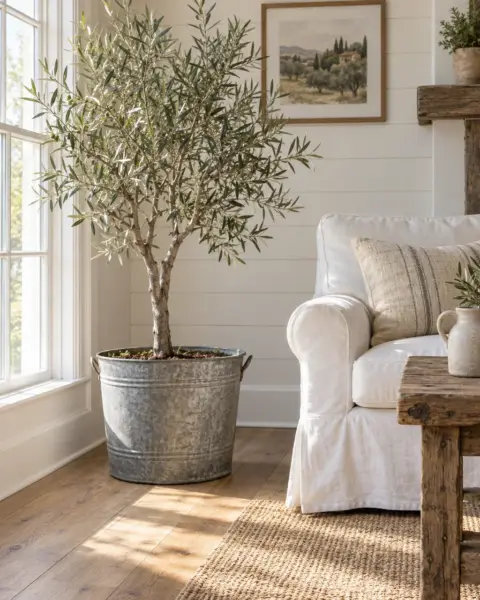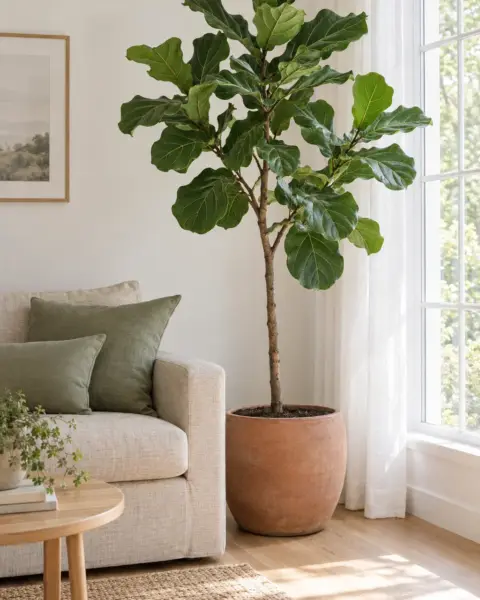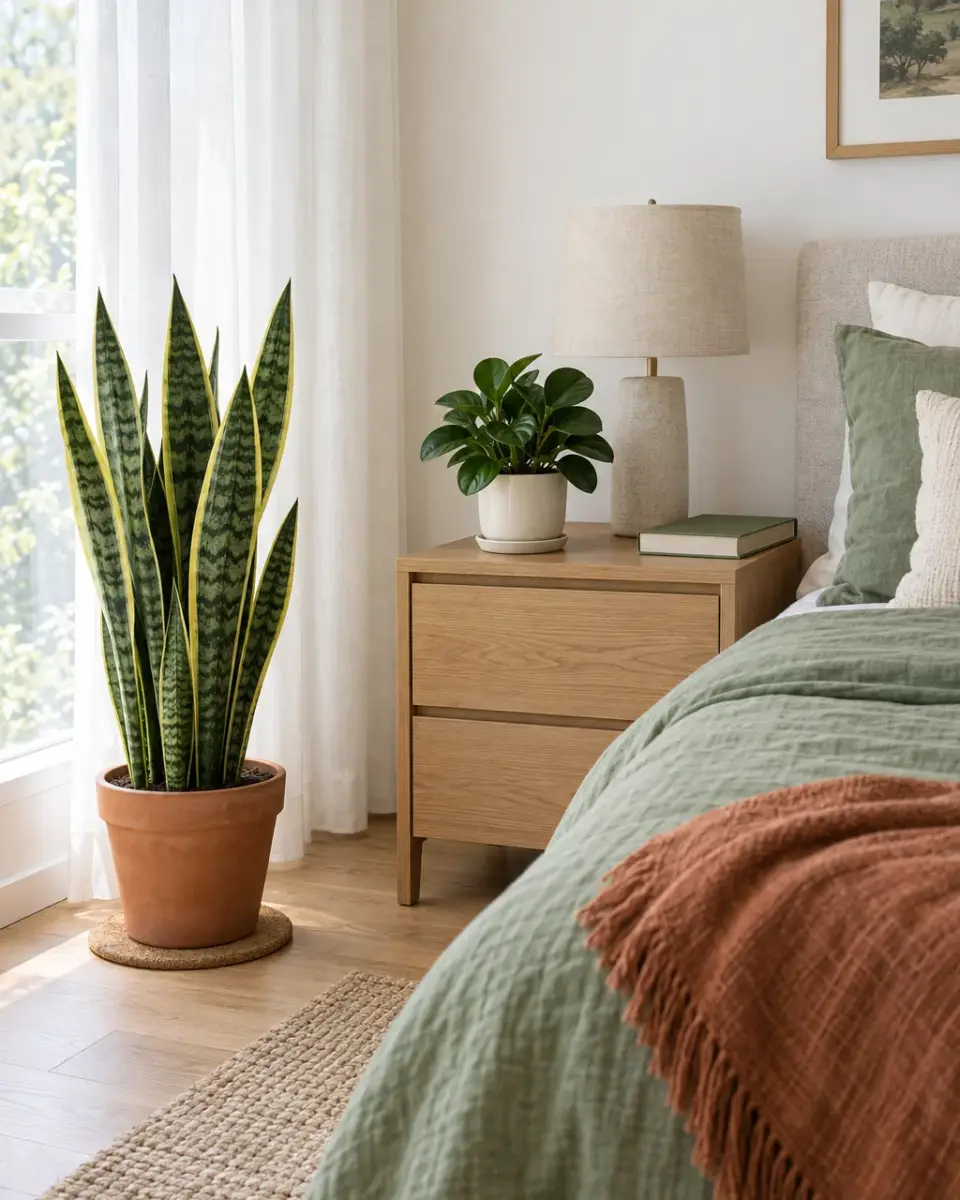
The bedroom tends to be the last room that gets plants, and the setup works against them: blinds stay down until late morning, the window may face north, and the nightstand already holds a lamp, a phone and a glass of water. Plants in bedroom corners, sills and nightstands can still do well. The trick is choosing each one for the light that spot actually gets, not for how it looked at the garden center.
Each idea below pairs a spot with plants that tolerate its light, plus the pot and placement that keep the room calm. Pet safety is noted throughout, since a nightstand sits at cat height.
How much light do plants in bedroom windows and corners really get?
Light fades fast as you step back from the glass. Colorado State University Extension’s guide to interior light puts high light within about 2 feet of an east- or west-facing window, medium light 2 to 6 feet back from those windows, and low light close to a north window from October through March. The far side of the room usually counts as low light, even when it looks bright enough to you.
Bedroom curtains often stay closed half the morning, which cuts that light further. A handy benchmark from University of Minnesota Extension: low light is roughly bright enough to read a newspaper. Dimmer than that at midday is too dark for most houseplants without help.
| Spot in the bedroom | Typical light | Plants that fit |
|---|---|---|
| Within 2 ft of an east window | Bright, gentle morning sun | Spider plant, African violet |
| Unshaded south or west sill | Strongest, hot in the afternoon | Cacti and succulents |
| 2 to 6 ft back from east or west glass | Medium | Peperomia, pothos, Boston fern |
| Near a north window | Medium in summer, low in winter | Parlor palm, pothos |
| Far corner across from the window | Low | Snake plant, cast iron plant, parlor palm |
Bedroom plant ideas matched to each spot
A small, slow plant on the nightstand
Most nightstands sit beside the window, not in front of it, so plan for medium light and a compact plant that doesn’t need frequent watering.
Peperomia obtusifolia, the baby rubber plant, fits well: thick, glossy, rounded leaves on a plant that stays tabletop-sized, and peperomias are listed among medium-light houseplants. Right by an east window, an African violet works too. Dwarf snake plant cultivars can stay as short as 6 to 7 inches, but snake plants are toxic to cats and dogs, so skip them if a pet shares the bed.
A 4- to 6-inch pot leaves room for the lamp, a book and your phone, and matte ceramic in cream or sage looks quieter next to bedding than a glossy, bright glaze. Add a saucer or cachepot so a damp base can’t mark the wood. Better still, water at the bathroom sink, let the pot drain, then bring it back, so water never gets near a charging cable.

Windowsill plants sorted by the direction the glass faces
An east sill suits a young spider plant (Chlorophytum comosum), whose striped, arching leaves like bright light and some direct sun, though harsh midday sun can scorch them. An unshaded south or west sill is the place for cacti and succulents; for anything leafier on those windows, a sheer curtain softens summer sun. A north sill gives medium light in summer and low light in winter, so keep it for tough plants like a small parlor palm or a pothos in a narrow pot.
In winter, keep leaves off the cold glass and move plants off any sill above a radiator or vent. If you close heavy curtains at night, keep the plants on the room side of the fabric.
Terracotta suits succulents on a sunny sill, because porous clay dries the soil faster than plastic or glazed ceramic. Set each pot on a small tray so watering doesn’t stain the paint.
Shelves and dresser tops where trailing plants can spill
A dresser or shelf across from the window usually gets medium to low light: pothos territory. Epipremnum aureum prefers bright, indirect light but survives long periods in low light, though variegated leaves lose some color there. Let its heart-shaped leaves trail down one side of the shelf, not both, so the vines frame the furniture instead of hiding the drawers. Pothos is toxic to cats and dogs, and a high shelf keeps it away from a dog but rarely from a cat.
One trailing plant per shelf run, balanced by a short stack of books, keeps it calm. For a fuller plan, see what grows best at each shelf height.
Hanging plants in the bedroom, kept clear of the bed
In a small bedroom, hanging plants free up surfaces. A spider plant is the classic choice: it can spread 2 to 2½ feet wide with stems trailing 2 to 3 feet from a hanging basket, and it is non-toxic to cats and dogs. A Boston fern (Nephrolepis exaltata) gives a softer, fuller look and is also non-toxic, but it asks more: bright, indirect light, evenly moist soil and the high humidity ferns prefer. Dry winter heating air works against it, so hang it well away from any vent.
Hang them in a corner near the window, never above the pillows where a basket can drip, and high enough that you won’t brush them in the dark. Use a hook driven into a ceiling joist and rated for the pot’s wet weight; this guide to choosing a hook and hanger that can hold the weight covers the hardware. To water, lift the basket down and soak it in the tub.

One tall plant to fill a dim corner
A bare corner by the closet rarely gets more than low light, and one tall plant there looks more deliberate than a cluster of small ones.
The snake plant (Dracaena trifasciata) has stiff, upright, sword-shaped leaves that can reach 2 to 4 feet. It tolerates very low light and rots if overwatered; in winter, watering every one to two months is enough. It is toxic to cats and dogs. The cast iron plant (Aspidistra elatior) is the pet-safe alternative, with broad, dark green leaves in a slow, upright clump. The parlor palm (Chamaedorea elegans) brings softer, feathery fronds and is also non-toxic.
Foliage that ends around headboard height ties the corner to the room; a low wooden stand lifts a shorter plant into line. Terracotta suits the snake plant’s dry-between-waterings habit, and a cork mat under any floor pot buffers the roots from a cold floor.
Care notes for plants in a room where you sleep
Water less than you think in a dim bedroom
Plants in lower light grow more slowly and use less water, so a schedule that suits a sunny living room will drown a bedroom plant. Water only when the top inch or two of soil is dry, and wait until a snake plant’s soil is dry most of the way down. Empty saucers after watering.
Soggy soil also invites fungus gnats, the tiny dark flies that hover around pots and windows. NC State Extension’s notes on fungus gnats tie them to overwatering, flag them as a winter problem and recommend letting the soil surface dry between waterings.
Heat, cold glass and closed curtains
Keep plants away from radiators, heating vents and drafty frames, and open the curtains during the day. Nothing grows for long without light, so in a bedroom with no usable window, a small LED setup on a timer can carry low-light plants. Most plants need a daily dark period, and University of Maryland Extension suggests no more than 16 hours of light in total, so set the timer to switch off before bedtime.
Cats, dogs and plants at bed height
In this guide, the snake plant and pothos are toxic to cats and dogs: snake plant saponins can cause nausea, vomiting and diarrhea, and pothos contains calcium oxalate crystals that irritate the mouth. Spider plant, parlor palm, cast iron plant, Boston fern and peperomia are listed as non-toxic. Check anything new by its Latin name on the ASPCA toxic and non-toxic plant list, since common names overlap.
Bedroom plant questions about sleep, air and pets
Do plants in bedroom corners use up oxygen at night?
Not in any way you’d notice. Plants respire around the clock, and after dark, when photosynthesis stops, they release a little carbon dioxide. A few houseplants release far less than a sleeping person does, and extension horticulturists list the old advice to remove plants from bedrooms at night among debunked houseplant myths.
Will a few plants clean the air while you sleep?
Not at home scale. The idea comes from a 1989 NASA experiment in small sealed chambers. A 2019 Drexel University review found that normal air exchange in a home dilutes pollutants far faster than potted plants remove them, so an open window does more.
Can a nightstand plant stay if your cat sleeps on the bed?
Yes, if it is non-toxic to cats and dogs, like a peperomia, an African violet or a small parlor palm. Non-toxic doesn’t mean edible: a cat that chews a lot of leaves can still get an upset stomach. If your pet eats a plant you’re unsure about, call your veterinarian or the ASPCA Animal Poison Control Center at (888) 426-4435 (a fee may apply).
Quick recap for placing plants in bedroom corners, sills and shelves
- Read the light first: window direction, distance from the glass, curtain habits.
- On the nightstand, choose a compact, slow plant in a 4- to 6-inch pot with a saucer, and water it at the sink.
- Match sills to the window: spider plant facing east, succulents facing south or west, no leaves on cold glass.
- Give each shelf run one trailing pothos at most, out of a cat’s reach.
- Hang plants near the window, never above the pillows, from a hook set into a joist.
- Fill a dim corner with one snake plant, cast iron plant or parlor palm, and water it sparingly.
Planning plants in bedroom spaces with an awkward window or a pet that climbs? Describe the room through the Contact page.