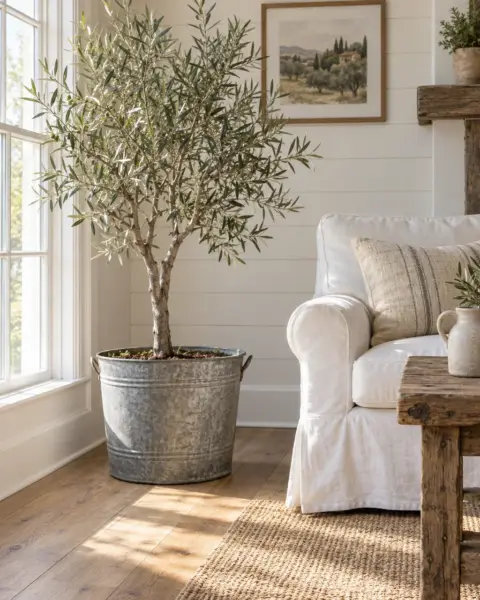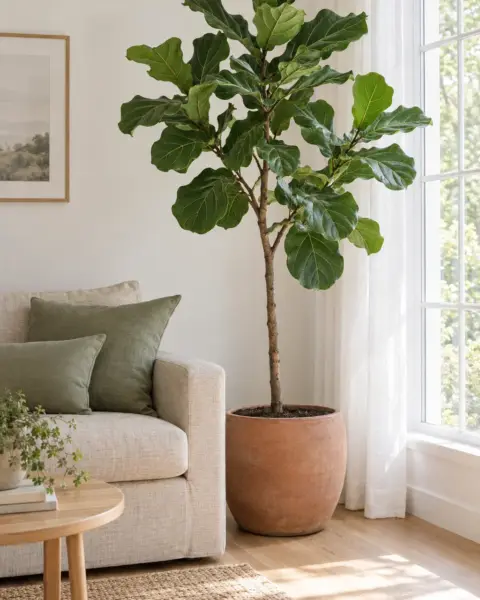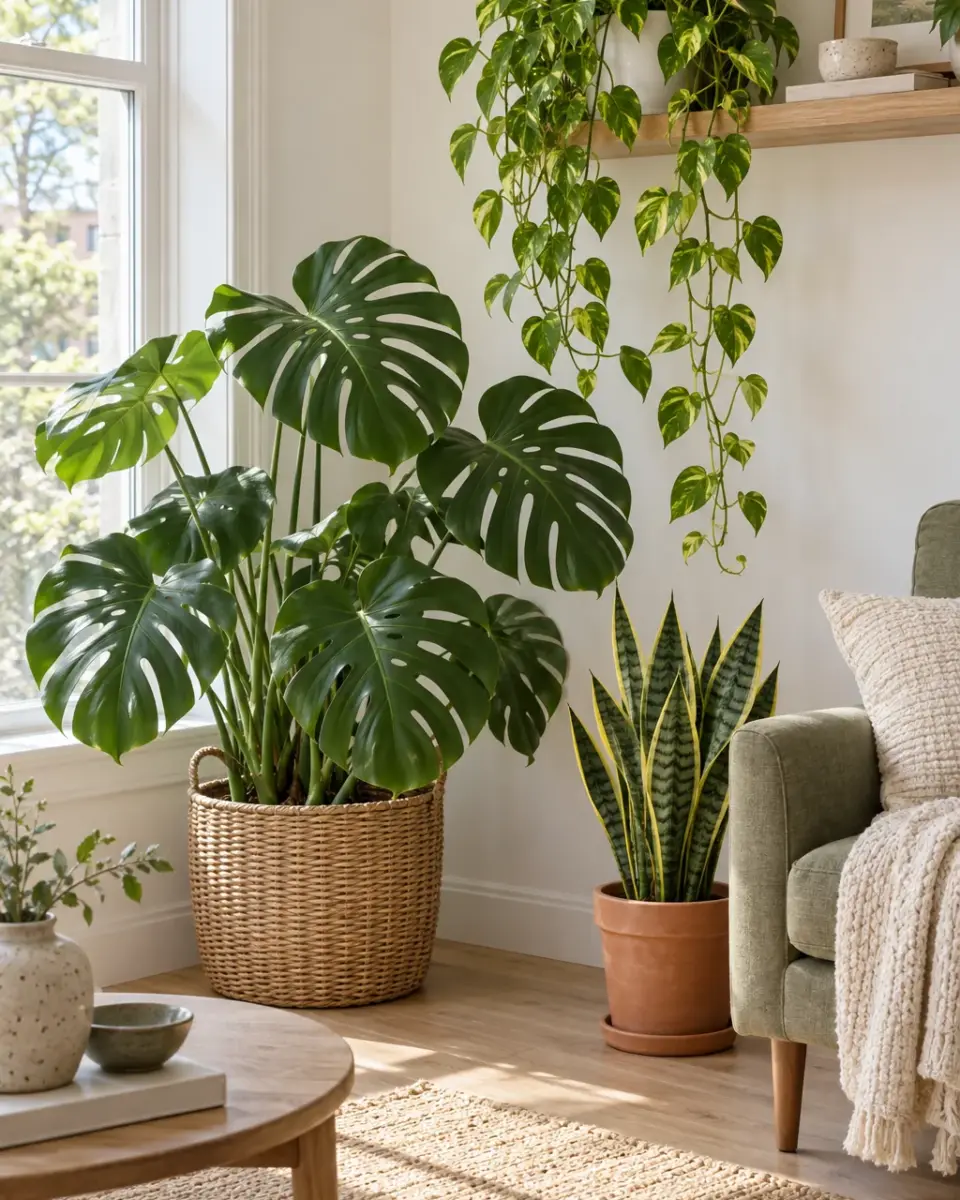
You’ve probably saved a few of those photos already: a vine spilling off a wooden shelf, a big split-leaf plant in a woven basket, a row of clay pots on a sunny sill. A houseplant aesthetic like that rarely comes from owning more plants. It comes from putting the right plant in the right light, then dressing it in materials that match your room.
Below are five looks, boho, minimalist, Scandinavian, earthy and tropical, each with plants matched to real light and the pots and textures that make the style read.
What makes a houseplant aesthetic feel cozy instead of cluttered
A styled corner and a cluttered one often hold the same number of pots. The difference is a plan.
Start with the window, not the mood board
A south-facing window gets the most light, often direct sun for much of the day. A north-facing window gets the least, with no direct sun, and east and west windows fall in between. Distance counts too: a plant at the back of the room gets far less light than one beside the glass. Plants sold as low-light tolerant usually grow better with more light, so when two spots look equally good, choose the brighter one.
Repeat one or two materials
Pick a short material story and stick to it: terracotta and pale wood, rattan and white ceramic, or matte black and stone. When several pots share a finish, your plants read as a collection instead of separate purchases.
Mix heights and leaf shapes
Work in layers: a floor plant reaching upward, something at table height, a trailing plant up high. Then contrast the leaves. A broad, glossy leaf beside a fine, arching one looks intentional, while two similar leaves side by side blur together.
Boho plant decor: trailing vines, woven textures and warm wood
Boho rooms lean on texture: rattan, jute, macramé, worn wood and a few patterned textiles. Plants with long, loose growth fit that relaxed mood.
Pothos (Epipremnum aureum) is the classic choice. Its heart-shaped leaves trail from a high shelf or a macramé hanger, and it grows best in bright, indirect light while tolerating lower light. Variegated types such as ‘Marble Queen’ need more light and can lose some of their pale streaking in a dim spot. Pothos is toxic to cats and dogs, so a hanger or top shelf earns its place twice.
Spider plant (Chlorophytum comosum) adds arching striped leaves and small plantlets dangling on long stems, perfect for a hanging basket near a bright window. Unlike pothos, it’s listed as non-toxic to cats and dogs.
Hang trailing plants so the vines fall at eye level, not down the back of a sofa. Then layer the corner: a woven floor basket with a larger plant, a wooden stool holding a mid-size pot, a hanging planter above. Rattan baskets aren’t watertight, so they need a liner (see below).
Minimalist plants: one strong shape per surface
Minimalist styling works when each plant has room around it. Choose clean, graphic outlines and give each plant its own surface or patch of floor.
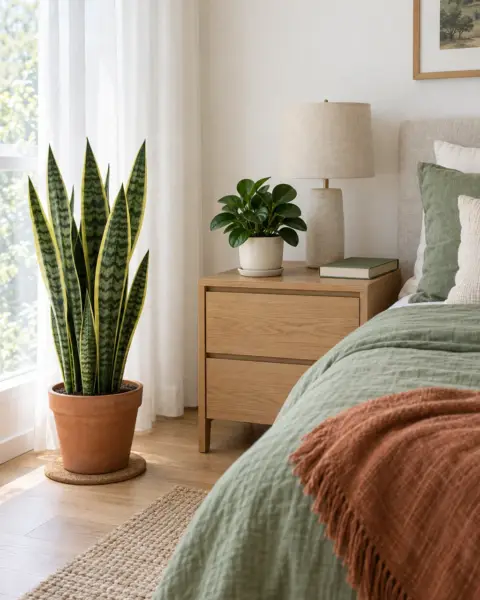
Snake plant (Dracaena trifasciata) has stiff, upright, sword-shaped leaves that read almost like sculpture, and it grows in low to bright light. A tall one in a plain matte cylinder beside a low console is often all a minimalist living room needs.
ZZ plant (Zamioculcas zamiifolia) brings glossy, almost polished leaves on upright stems. It survives low light, though bright, indirect light speeds its naturally slow growth; keep it out of full sun. Mature plants reach 2 to 4 feet tall and wide. The cultivar ‘Raven’ matures to a deep purple-black, striking against a white wall. Small dark spots on ZZ stems are normal.
Keep pots plain: white, charcoal or concrete gray. When the pot matches the wall or floor, the leaves carry the look.
Scandinavian plant decor: pale wood, white walls and a windowsill pilea
Scandinavian rooms are bright and practical, built on light oak or birch, white ceramics, linen and soft gray textiles.
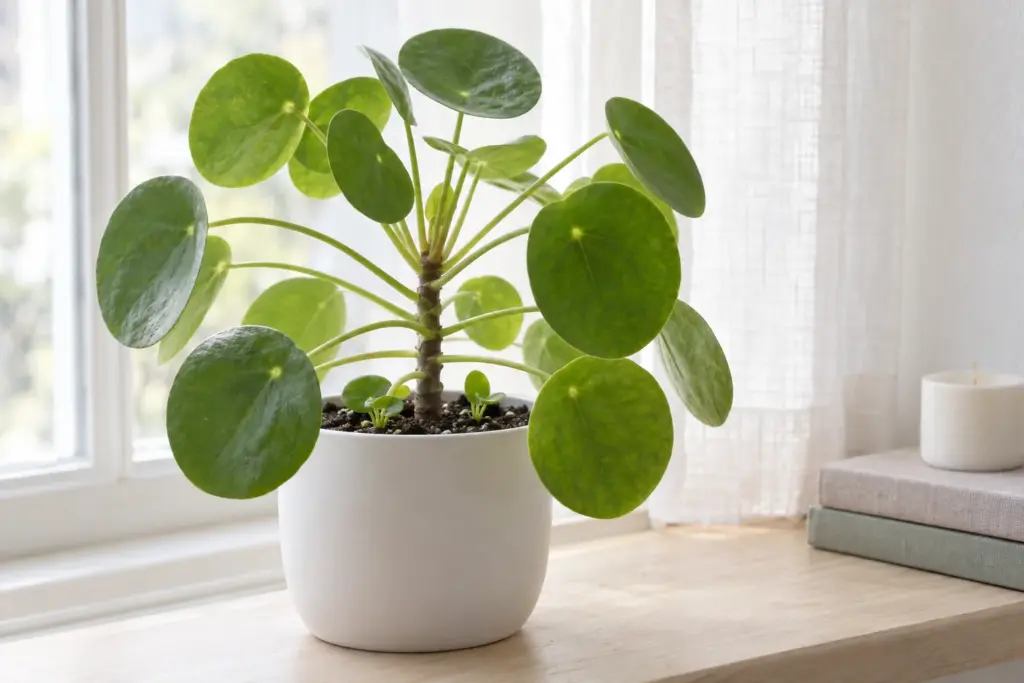
Chinese money plant (Pilea peperomioides) has a real Nordic history. A Norwegian missionary, Agnar Espegren, brought it home from China in 1946 and shared offshoots with friends, which is how it spread across Scandinavian windowsills decades before it caught on elsewhere. Its round, coin-shaped leaves look best in bright, indirect light. Turn the pot about once a week, because the plant leans hard toward the window.
Parlor palm (Chamaedorea elegans) suits the dimmer side of the room. Its feathery fronds handle lower light than most palms, and it’s listed as non-toxic to cats and dogs. Set one in a pale wooden plant stand a few feet from a north- or east-facing window.
On the sill, line up two or three small pilea in identical white pots and keep accessories to a candle and a few books.
Earthy style: terracotta, clay tones and plants that like to dry out
Earthy rooms use warm clay, rust, olive and sand tones with stoneware, linen and raw wood. Unglazed terracotta is the star, and it changes how you water.
Terracotta is porous, so moisture escapes through the walls and the potting mix dries faster than in plastic or glazed pots. That suits plants that like to dry out between waterings, such as cacti, succulents and snake plants, while moisture lovers like ferns usually do better in plastic or glazed ceramic.
So build around drought-tolerant plants: a snake plant or ZZ in a large terracotta pot on the floor, and succulents in shallow clay bowls on your sunniest sill, usually one facing south or west. Cacti and succulents need that high light. Add a jute rug and a stoneware vase of dried grasses, and the green keeps the warm palette from looking flat.
Tropical houseplants: big leaves grouped near your brightest window
The tropical look is the hardest to fake in a dark room, because the plants that define it want plenty of light.
Monstera (Monstera deliciosa) is an understory climber from Central American rainforests. Indoors it does best in bright light and won’t develop its famous splits and holes when light is too weak. Large, leggy plants often need a stake or support pole. It’s toxic to pets.
Giant bird of paradise (Strelitzia nicolai) adds tall, paddle-shaped leaves. It needs your brightest spot, ideally with some direct sun, right beside a south- or west-facing window.
Calathea (Goeppertia species, often still sold as Calathea) fills the lower layer with patterned leaves in low to medium light. Direct sun scorches it, and brown edges usually point to dry air or fluoride in tap water. Calatheas are listed as non-toxic to cats and dogs.
Group them: the bird of paradise nearest the glass, the monstera beside it, a calathea on a low stool in front, out of direct sun. Grouping gives the layered jungle look and raises humidity around the leaves a little. Keep rattan, dark wood and leafy prints in small doses so the real foliage stays the focus.
How to combine greenery, natural materials and decorative accessories
When styling hurts a plant, the culprit is usually the container.
Hide the nursery pot inside the decorative one
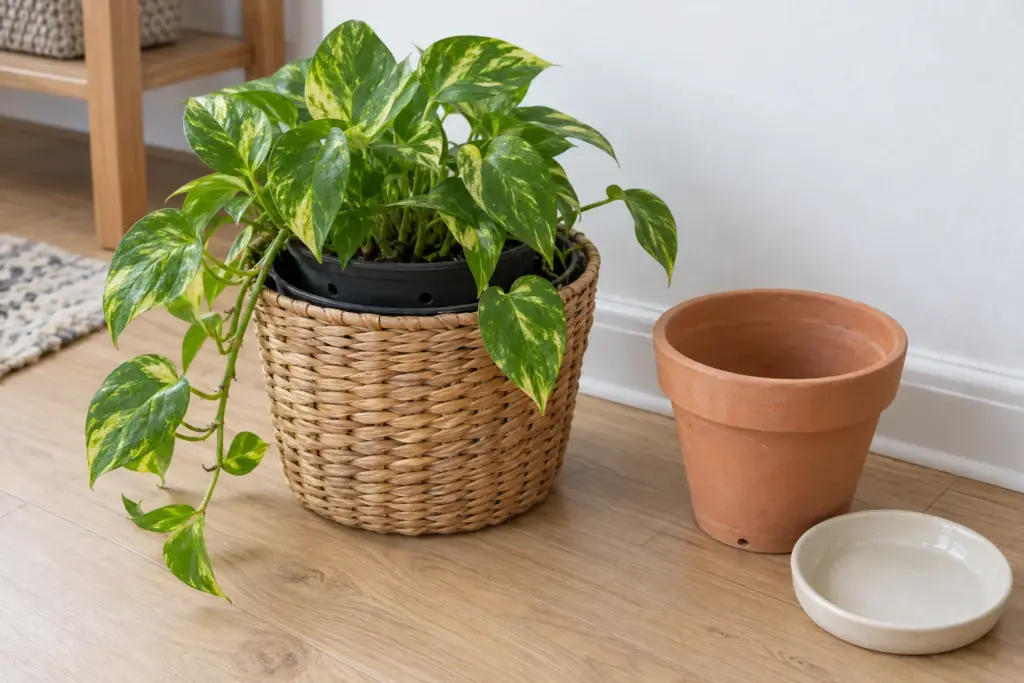
Many glazed ceramic pots have no drainage hole and are meant to hold a plastic pot inside. Keep the plant in its draining nursery pot, put a little gravel in the bottom of the decorative pot and slip the plastic pot in. Gravel alone doesn’t replace a drainage hole, so never plant directly into a sealed pot. To water, lift the inner pot out, water it at the sink and let it drain. Virginia Tech’s extension guide to watering houseplants explains how each pot type changes drying speed.
Line baskets and protect wood
Rattan, seagrass and jute baskets need a plastic liner, or water will seep onto the floor. Every pot with a drainage hole needs a saucer, especially on wood. On wood furniture, a glazed or plastic saucer is safer than unglazed clay, which lets moisture pass through.
Let accessories frame the plant, not shade it
Candles, books and ceramics make a plant corner feel lived in, but keep tall objects out of the path between plant and window. Wipe large leaves when they look dusty, so they look better and catch more of the light you chose that spot for.
FAQ: Houseplant aesthetic questions about pets, dark rooms and humidity
Can you build a houseplant aesthetic in a room with little natural light?
Yes. Snake plant and ZZ plant survive low light, though they grow slowly there, and a parlor palm handles a dim corner better than most palms. For a spot far from any window, a plant lamp aimed at that corner can make up the difference.
Which cozy-looking plants are safe for cats and dogs?
Parlor palm, spider plant and calathea are listed as non-toxic to cats and dogs, while pothos and monstera are toxic. Check any new plant by its Latin name on the ASPCA toxic and non-toxic plant list before it joins your shelf.
Should you mist plants to keep a tropical corner looking lush?
Misting raises humidity only for minutes. Grouping plants helps a little, and a humidifier is the most dependable fix for dry winter air. Penn State Extension’s article on humidity and houseplants sorts the tricks that work from those that don’t.
Is the bathroom a good place for a tropical plant shelf?
Only if it has a window. Bathrooms often lack enough light, even when the steam suits humidity lovers. A window with bright, indirect light makes it a good spot for a calathea or pothos.
Quick recap: your houseplant aesthetic in five steps
- Note which way your window faces and how far each spot sits from it.
- Choose your style, then pick plants that fit that spot’s real light.
- Repeat one or two materials across pots, baskets and furniture.
- Combine a tall plant, a mid-height plant and a trailing one with contrasting leaves.
- Keep nursery pots inside decorative ones, line baskets and put a saucer under every draining pot.
A houseplant aesthetic comes together one corner at a time: style a single spot, watch how the plants respond for a few weeks, then move on. Questions about your own room are welcome through the Contact page.