You probably have a spot in mind already: the empty corner beside the sofa, the bare nightstand, the shelf above the tub. Good indoor plant decor starts with that picture, then checks it against the one thing styling photos rarely show, which is how much light the spot actually gets. A fern that looks perfect in a showroom bathroom will yellow on a dim shelf, while a tough snake plant can sit in that same corner and barely notice.
Below are ideas for the living room, bedroom, bathroom, entryway and kitchen, each with plants matched to the light those rooms usually get, plus the pots and placement that make a few plants look planned instead of scattered.
How indoor plant decor works when you plan around the light
Window direction and distance matter more than any styling trick. The University of Illinois Extension lighting guidelines give a handy rule of thumb: a few feet from a north window is low light, the same distance from an east or west window is medium light, and anywhere within about 5 feet of a south window is bright. Step 15 to 20 feet back from that south window and you’re in low light again.
Light fades quickly away from the glass, and curtains or the building next door cut it further. The low winter sun reaches deeper into a room, but the days are short, so a corner that felt bright in July can be dim by January. Pick the spot first, judge its light honestly, then choose the plant.
Pots, baskets and planters that look good and still drain
Many pretty containers, like glazed bowls and woven baskets, have no drainage hole. Use them anyway: keep the plant in a plain nursery pot with holes and slip it inside, a method called double potting. The Colorado State University guide to houseplant containers suggests a little gravel in the bottom of the outer pot and a plastic liner in any basket. After watering, pour off whatever collects so roots never sit in water.
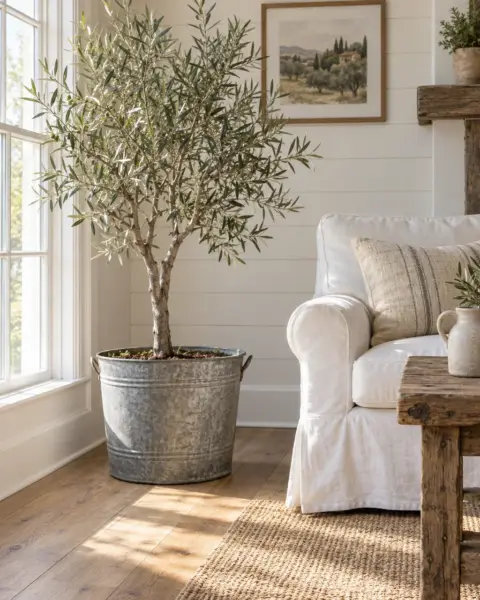
When you repot, go only 1 to 2 inches wider than the root ball. Tall floor plants need weight, because light plastic pots tip over easily, so a heavy ceramic or terracotta outer pot keeps a 5-foot plant steady. Unglazed clay also dries faster than plastic, so plants in terracotta need water more often.
Living room plant decor: one statement plant, then layers
A tall plant for the brightest corner
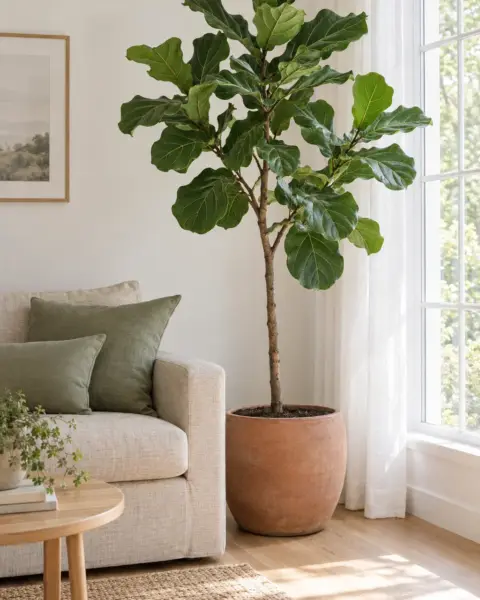
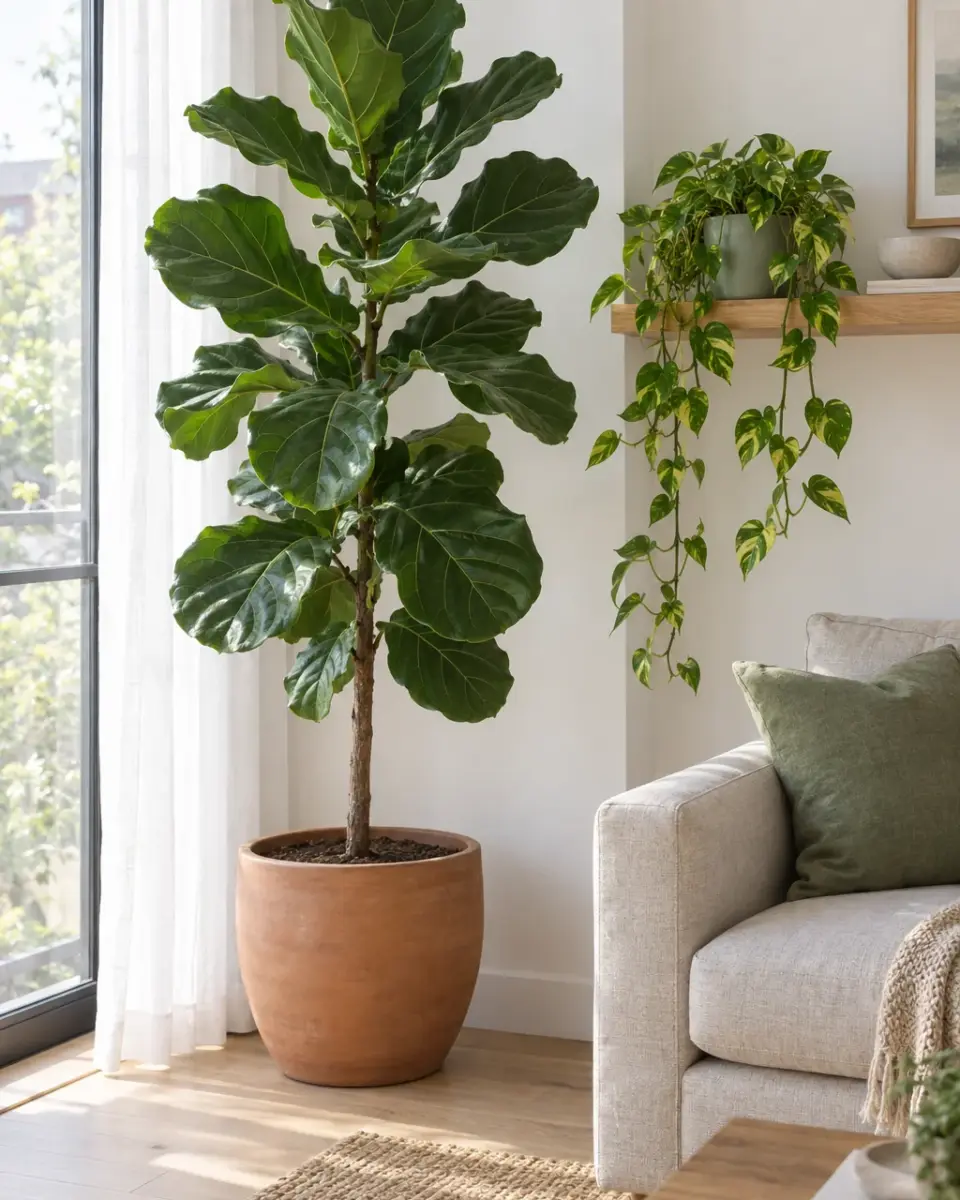
The fiddle-leaf fig (Ficus lyrata) earns its place in design photos: its leaves can reach 18 inches long, and indoors it grows 2 to 10 feet tall. It needs bright, indirect light with protection from harsh afternoon sun, so set it a few feet from an east or west window or a few feet back from a south one. Cold drafts, sudden moves and soggy soil are the usual reasons it drops leaves, so choose its corner once and leave it there.
Scale it against the furniture: a plant that rises above the sofa back frames a window, while one at sofa height disappears behind it. A wide terracotta or matte ceramic pot balances its top-heavy shape.
Trailing plants on shelves and consoles
Pothos (Epipremnum aureum) is the classic shelf plant because it tolerates low light, and its vines soften the hard lines of books and electronics. Give it the shelf nearest the window rather than the top of a tall bookcase in a dark corner. On open shelving, mix textures (sage ceramic, terracotta, a woven basket) but repeat one color or material on more than one shelf. That repetition is what makes a collection look planned.
Low-light corners away from the window
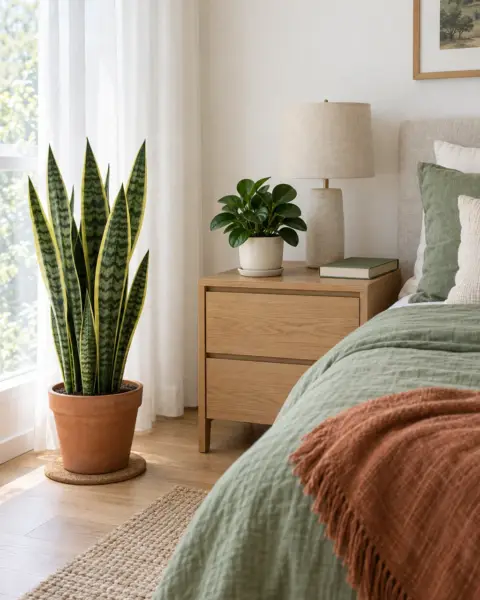
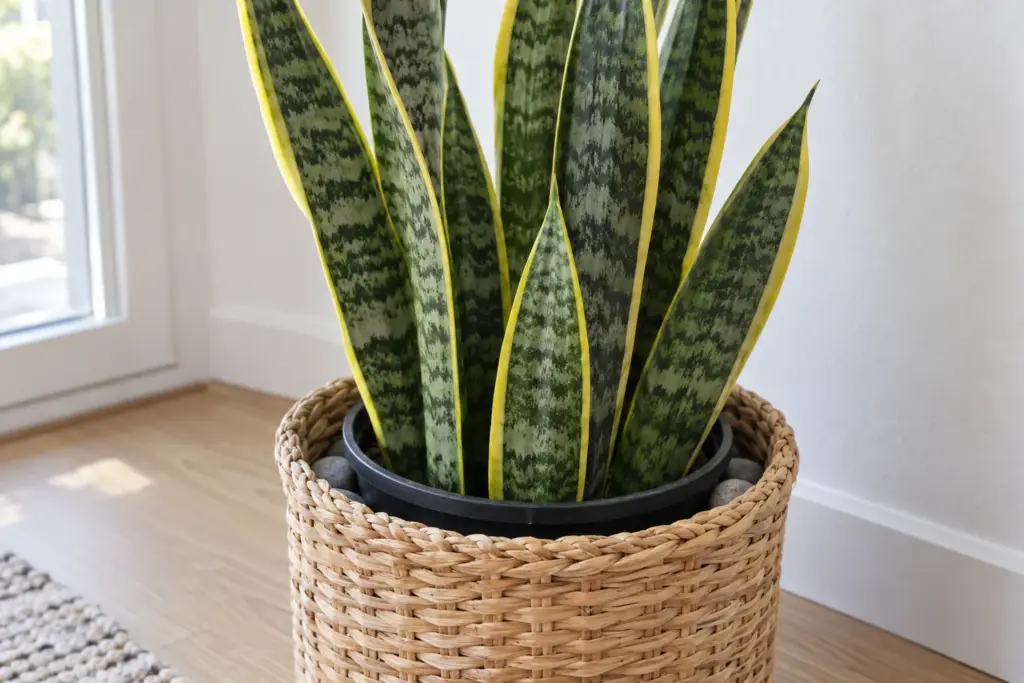
ZZ plant (Zamioculcas zamiifolia), snake plant (Dracaena trifasciata, still often sold as Sansevieria) and cast iron plant (Aspidistra elatior) all appear on the University of Maryland Extension’s low-light list, the level you find near a north window. Expect slow growth and let the soil stay on the dry side. The snake plant’s stiff, upright leaves fit a narrow gap beside a bookcase; the cast iron plant’s arching dark leaves fill a wider corner.
Bedroom plant ideas for a calm, low-care room
Bedrooms often keep blinds or curtains closed much of the day, and window coverings cut light dramatically. That makes the bedroom a place for forgiving foliage plants rather than flowering ones, which need direct sun for about half the day to bloom well.
On a nightstand near the window, a parlor palm (Chamaedorea elegans) brings soft, feathery fronds in a small footprint; it’s on the University of California’s low-light list. A spider plant (Chlorophytum comosum) in a hanging planter near the window keeps surfaces clear. It handles low to medium light, grows best in bright filtered light, and strong direct sun can burn its leaf tips. If no pets share the room, a snake plant in a matte ceramic pot works at the foot of a dresser.
One winter caution: radiators and heating vents often sit under bedroom windows, and indoor plants suffer near heat sources. Keep pots off the radiator cover and out of the vent’s airflow.
And skip the idea that a bedroom plant cleans the air while you sleep: a Drexel University review of 30 years of studies found houseplants remove pollutants far too slowly to matter in a real home.
Bathroom plants that love steam, as long as there’s a window
Humidity is the bathroom’s advantage: the University of Maryland Extension notes that every indoor plant except cacti and succulents benefits from more of it. It can’t replace light, though, and light is usually what limits a bathroom.
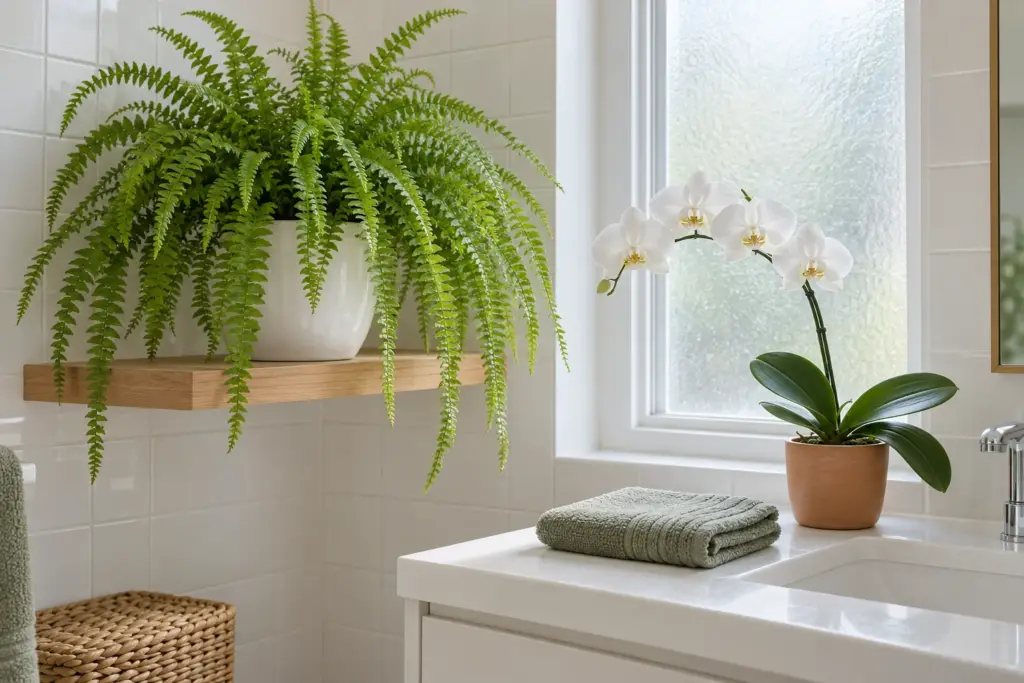
With a bright or medium window, a Boston fern (Nephrolepis exaltata) fills a floating shelf or a hanging basket with arching fronds; Oregon State University Extension lists it for medium light. A moth orchid (Phalaenopsis) suits the windowsill or the vanity close to the glass, where it gets bright, indirect light. Frosted glass reduces the light that comes through, so keep the orchid near the pane. Glazed ceramic handles splashes better than raw wood or unlined baskets.
A bathroom with no window is a different story. Vanity bulbs alone won’t keep a plant going for long, so you’d need a plant lamp made for dark rooms, set on a timer.
Entryway plants that cope with drafts and dim light
The entryway is often the hardest spot: little or no window, a door that lets in cold air every time it opens, and not much floor space. Indoor plants are sensitive to drafts and sudden temperature changes, so leave the fiddle-leaf fig in the living room.
Choose from the low-light group instead. A snake plant takes very little floor space in a narrow hall, and a cast iron plant gives a fuller shape beside a console table. Keep the plant out of the walkway. If your entry has a window or sidelight, place the plant where it sees the glass without touching it, since leaves against a cold pane can be damaged. An entry with no natural light at all needs the same fix as a windowless bathroom: a lamp.
Kitchen plants: herbs on the sill, foliage away from the stove
Herbs are the obvious kitchen plant, and the window decides whether they succeed. The Chicago Botanic Garden notes that most herbs need four to six hours of sun a day, or about 14 hours under supplemental light, with a south or southwest window being best. A north-facing kitchen window rarely gives that much, so choose foliage plants there.
Herbs other than basil do best right next to a cool windowpane. Line them up on the sill in matching terracotta or white ceramic pots with drainage holes and saucers, and check terracotta more often since it dries faster.
Keep foliage plants away from the stove, the oven and the dishwasher vent. A spider plant hanging near the window or a pothos on an open shelf that catches daylight adds green above the counters. If a cat likes to explore the counters, choose the spider plant.
Care notes that keep a plant display looking good all year
- Group plants on purpose. Clustering pots looks fuller and raises the humidity around them a little. Misting barely helps, because leaves dry quickly.
- Move plants with the seasons. A plant happy in an east window in summer may need a south window in winter. Pull plants back from cold window ledges in winter, and add a sheer curtain when summer sun gets intense.
- Empty the decorative pot. Water pooling in a cachepot keeps roots wet even when the nursery pot drains well.
Indoor plant decor questions about light, windowless rooms and pets
What indoor plant decor works in a dark apartment?
Low-light plants such as snake plant, ZZ plant, cast iron plant and pothos, placed within a few feet of your brightest window, even a north-facing one. “Low light” still means daylight, so the far end of a dark room doesn’t count.
Can a plant live in a bathroom with no window?
Not for long on ordinary bathroom lighting. Humidity helps leaves, but plants still need light to grow, so add a plant lamp on a timer.
Which plants in these ideas are safe for cats and dogs?
Cast iron plant, parlor palm, spider plant, Boston fern and moth orchid are listed as non-toxic to cats and dogs; snake plant and pothos are listed as toxic. Check any new plant by its botanical name on the ASPCA toxic and non-toxic plant list. Even safe plants can upset a stomach if eaten in quantity.
Quick recap: indoor plant decor room by room
- Judge each spot’s light first: window direction and distance matter more than the plant’s looks.
- Living room: one tall fiddle-leaf fig near bright light, pothos on shelves, low-light plants for far corners.
- Bedroom: parlor palm, spider plant or snake plant, kept away from radiators and vents.
- Bathroom: Boston fern and moth orchid if there’s a window, a plant lamp if there isn’t.
- Entryway and kitchen: low-light plants by the door, herbs on a sill with four to six hours of sun.
- Use decorative pots as covers over nursery pots with drainage holes.
Good indoor plant decor is mostly matching: the right plant to the light, then the right pot to the room. Start with the brightest spot in one room and build from there. Stuck on a tricky corner? Send it through the Contact page.