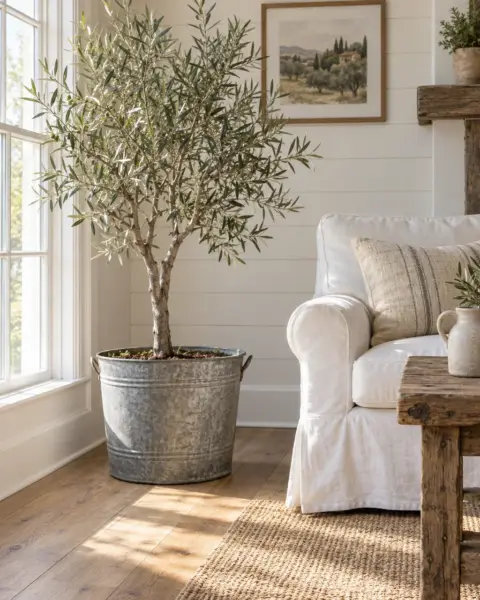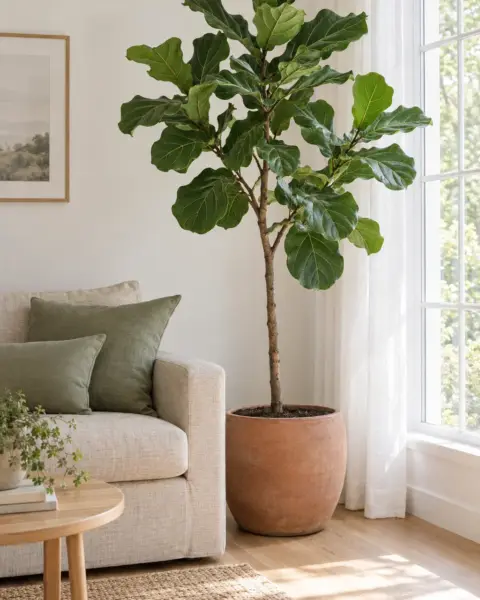
You bring home a gorgeous glazed planter, set your plant inside, and a month later the leaves are yellowing while the pot still looks perfect. That gap between a pretty container and a healthy plant is where most styling goes wrong. The potted plants indoor rooms show off best sit in pots that suit their light, their watering rhythm and the furniture around them.
So think of every pot as decor and equipment at once. Below: how terracotta, glazed ceramic and baskets change the way soil dries, how to use a planter with no drainage hole, and which plants fit a living room, kitchen, bathroom or bedroom based on the light those rooms really get.
Pick potted plants indoor spaces can actually support, then pick the pot
Light decides which plants stay handsome in a spot. The pot only helps or hurts from there, so stand where the plant will live and look at the window first.
University of Illinois Extension describes the area near an east- or north-facing window, or several feet back from any window without direct sun, as low light. Its list for those spots includes snake plant, pothos, peace lily, cast iron plant, Chinese evergreen and spider plant. A bright south-facing window is a different world, and that’s where light-hungry plants like kitchen herbs belong. Once you know which plant you’re housing, choosing the pot gets much easier.
Every decorative planter needs a way out for water
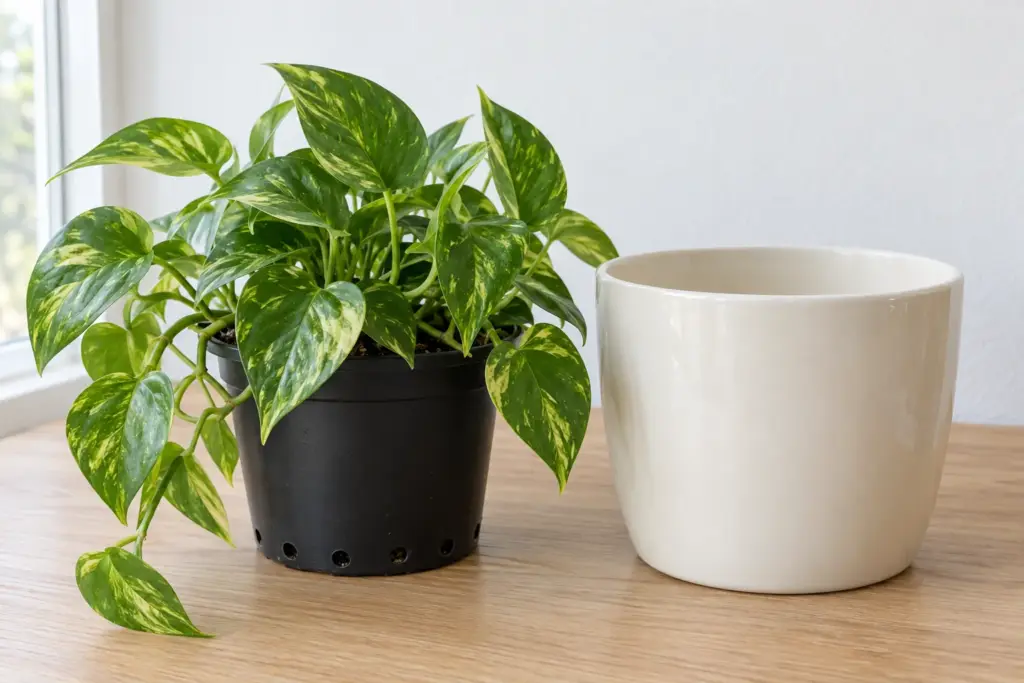
The most useful styling trick is the pot-inside-a-pot setup, often called a cachepot. Virginia Cooperative Extension points out that many glazed pots are made without drainage holes and are meant to hold a plastic pot set inside. University of Maryland Extension gives the same advice for decorative ceramics.
Keep the plant in a plain nursery pot with holes, slip it into the decorative planter, and lift it out to water at the sink. Let it drain before it goes back. If you water in place, check the bottom of the cachepot a little later and pour out anything that collected, since roots sitting in that puddle are exactly what you’re trying to avoid.
A few details make the setup look intentional:
- Hide the rim. Choose a cachepot slightly taller than the nursery pot, or tuck a little moss over the gap.
- Leave finger room. A bit of space around the inner pot makes lifting it out easy.
- Drill if you love the pot. Master Gardener volunteers with Virginia Cooperative Extension suggest a diamond drill bit for clay and ceramic, plus eye protection.
When a plant outgrows its nursery pot, size up modestly. Colorado State University Extension recommends a new pot only one to two inches wider than the current one, and Illinois Extension warns that an oversized soil volume can lead to root rot because the plant can’t use all that water.
Terracotta, ceramic or a basket: what each planter does to the soil
Material changes how fast the soil dries, and so how often you water.
Terracotta pots for plants that like to dry out
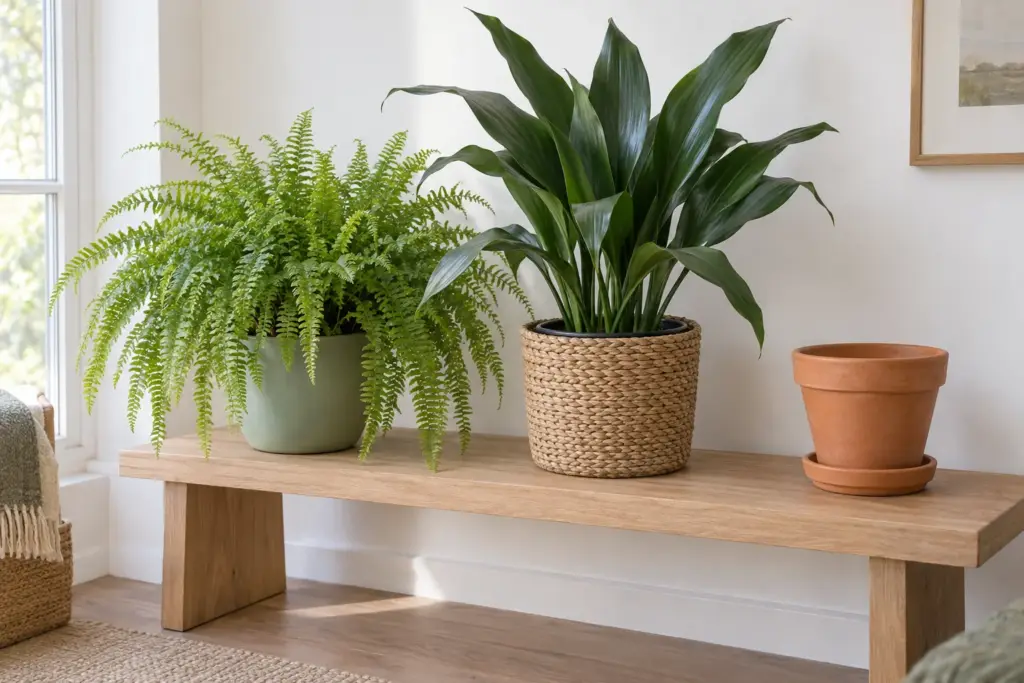
Unglazed terracotta is porous. Colorado State’s guide to houseplant containers explains that clay lets more air reach the roots but dries the potting mix faster, so you’ll water more often. It names cacti, succulents, orchids and bromeliads among the plants that may do better in unglazed clay, and Nebraska Extension adds that clay is the best choice if you tend to overwater. That warm orange also reads beautifully against white walls and pale wood. Since moisture passes through the walls, give it a saucer and keep it off unsealed wood.
Glazed ceramic planters for plants that want steady moisture
Glazed clay is fired hotter and coated, so Virginia Cooperative Extension notes it doesn’t lose water through its walls and the soil stays moist longer. That suits moisture lovers: Colorado State lists Boston fern among plants that grow well in plastic or ceramic. The tradeoff is fragility, and Maryland Extension adds that many lack a proper drainage hole, which is why the nursery-pot trick matters. Matte sage, cream or speckled glazes sit quietly in most rooms. Save a bold cobalt or glossy black for one statement pot.
Baskets and woven planters need a liner
Seagrass, rattan and jute bring a texture ceramic can’t. Colorado State is clear that a decorative basket needs a plastic liner, and that any pot with drainage holes needs a saucer to protect floors and furniture. The simplest version is a nursery pot on a plastic saucer, both hidden inside the basket. Baskets are light, too, so sliding a plant closer to the window in winter takes seconds.
Indoor potted plant ideas, room by room
Living room: one tall plant and one trailing plant
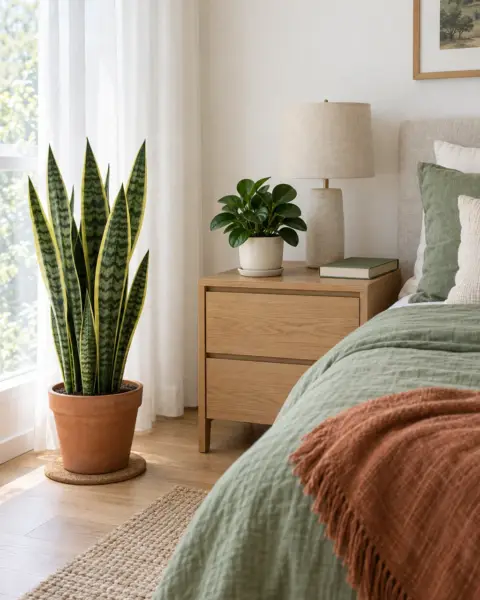
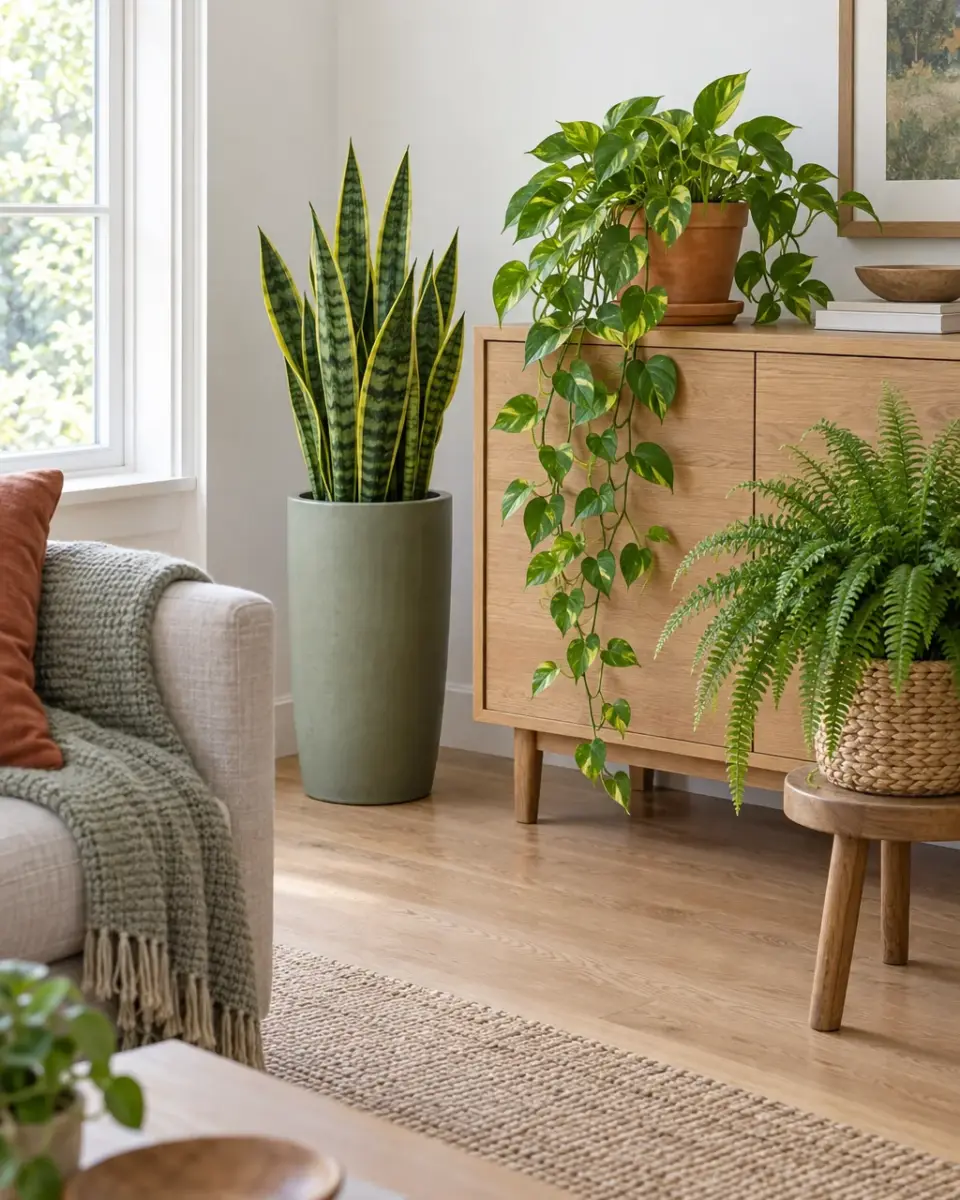
A living room usually has the most floor space and the best window, so it can carry a statement plant. A snake plant (Dracaena trifasciata) in a tall, heavy ceramic floor planter gives a strong vertical line beside a sofa or media console. University of New Hampshire Extension lists it at up to 24 inches tall and calls it a good pick if keeping houseplants alive has been hard for you.
Pair it with a pothos (Epipremnum aureum) in a terracotta pot on a shelf or sideboard, where the vines can spill over the edge. Both plants appear on Illinois Extension’s low-light list, so a north-facing living room can work too.
Kitchen: herbs on the sunniest sill
Herbs look charming lined up in matching pots, but they’re the most light-hungry plants here. Iowa State University Extension says most herbs need around eight hours of direct light a day indoors, some managing on six, and points to a south-facing window as a strong candidate. Give each herb its own small terracotta pot so one thirsty plant doesn’t keep its neighbors soggy, and set the row on a narrow wooden tray to catch drips. If your window can’t deliver that much sun, a plant lamp above the counter is more realistic than hoping the herbs adapt.
Bathroom: ferns, but only with a window
Steamy bathrooms get recommended for humidity lovers, yet Penn State Extension’s notes on humidity and houseplants say that benefit is hard to prove either way, and that bathrooms often lack enough light. If yours has a window, a Boston fern (Nephrolepis exaltata) in a glazed ceramic pot on the sill or a slim plant stand makes sense. Its arching fronds soften hard tile, the glaze shrugs off splashes, and the ASPCA lists it as non-toxic to cats and dogs. Without a window or a dedicated light, no plant there gets what it needs.
Bedroom: low, calm and forgiving
Bedrooms often face away from the brightest light and get less attention, so pick plants that forgive both. A cast iron plant (Aspidistra elatior) in a lined seagrass basket beside a dresser fits that brief; Penn State Extension says it tolerates neglect and low light and rarely needs repotting. A peace lily in a cream ceramic pot on a stand at nightstand height is another low-light option. One plant per surface reads calmer than a crowded nightstand.
How to arrange potted plants so a grouping looks planned
A random row of pots along a windowsill rarely looks styled, and the same goes for indoor plant decor anywhere in the house. A few habits change that:
- Vary the height. Tallest plant on the floor or at the back, a mid-height one on a stool, a trailing plant up high where it can hang.
- Repeat one material. A couple of terracotta pots plus one basket looks deliberate. Five unrelated finishes look like leftovers.
- Scale pots to the furniture. A floor plant beside a sofa should rise clearly above the armrest, while a tiny pot on a long console just disappears.
- Group by care. Thirsty plants together, drought-tolerant plants together, so one watering routine fits the whole cluster.
Iowa State Extension also calls grouping plants an easy way to raise the humidity around them. Treat that as a bonus rather than a fix, since Penn State is cautious about how much simple tricks change the air.
Care notes that keep a styled setup healthy
Turn your pots now and then: Illinois Extension recommends rotating them often so plants get even light, which also stops a grouping from leaning toward the glass. Before reusing an old pot, Colorado State advises cleaning it thoroughly so you don’t pass along pathogens or insects.
With pets at home, check every plant before it joins the display. Pothos is listed as toxic to dogs and cats, so hang trailing vines out of reach and look up newcomers on the ASPCA toxic and non-toxic plant list.
Potted plant questions about drainage, planters and placement
Do decorative pots need drainage holes?
The plant needs drainage, but the outer pot doesn’t have to provide it. A glazed planter without a hole works well around a nursery pot that has holes. Lift the inner pot out to water, or empty what collects in the bottom afterward.
Should you put rocks in the bottom of a planter?
Not as a drainage fix. Several extension services warn that a gravel layer can keep the soil just above it wetter instead of helping water escape. Some gardeners’ own tests have challenged that, but nobody argues gravel can stand in for a real drainage hole.
What are the best potted plants indoor corners with little light can support?
Start with low-light plants such as cast iron plant, snake plant, pothos, peace lily or Chinese evergreen. Skip herbs and sun lovers there, since they need hours of direct light. In a truly dark corner, plan on a lamp made for plants.
Can a terracotta pot sit directly on a wood table?
It’s better not to. Unglazed clay lets moisture pass through, and Colorado State recommends a saucer under every pot that drains. A plastic saucer or a cork mat keeps water marks off the wood.
Quick recap before you choose your next planter
- Read the light first, choose a plant that suits it, and only then the pot.
- Keep plants in pots with drainage holes and use hole-less planters as cachepots.
- Choose terracotta for plants that like to dry out and glazed ceramic for moisture lovers.
- Line every basket and put a saucer under every pot that drains.
- Group plants by height and care needs, and repeat one material so the arrangement looks planned.
The potted plants indoor spaces keep looking good for years are the ones whose pots work as hard as they look. Have a tricky corner or a planter you’re unsure about? Send it through the Contact page.