You have a handful of plants, a few empty surfaces and a room that still doesn’t look finished: pots lined up on the windowsill, one plant leaning hard toward the glass, a corner still bare. The best houseplant display ideas fix both problems at once: they make the room look styled, and they put each plant where the light, the watering and your reach actually work.
Below are practical ways to use shelves, plant stands, tables, baskets and hanging planters, then ideas by room and by interior style. Every one starts with the same check, because a display that looks perfect for two weeks and then sheds leaves isn’t working.
Where houseplant display ideas start: the light in each spot
Stand where the plant will go and look at the window. Light fades quickly with every foot you move away from the glass, and Oklahoma State University Extension notes that most houseplants need the kind of light found within about 4 to 8 feet of a bright south window. Very few plants tolerate a truly dark corner.
A rough map helps before you buy anything:
- Bright spots: right at a south- or west-facing window. This is where succulents and cacti belong.
- Medium spots: an east window, or a few feet back from a bright one. Most tropical foliage plants are happy here.
- Low spots: a north window or the far side of a room. North exposure counts as low light because it gets little direct sun.
Curtains, trees, neighboring buildings and dirty glass cut the light further, while pale walls bounce some back. For low spots, stick with tolerant plants such as snake plant (Dracaena trifasciata, often still sold as Sansevieria), ZZ plant (Zamioculcas zamiifolia), pothos (Epipremnum aureum), cast iron plant (Aspidistra elatior) and Chinese evergreen. They survive there, though they grow slowly.
Shelves and ledges that make room for trailing plants
Open shelves and bookcases
A plant shelf stacks greenery vertically, which matters in a small apartment. Put trailing plants like pothos on the top shelf so the vines fall past the lower levels, and keep upright plants lower down. Pull each pot to the front edge, since the shelf above blocks light.
A bookcase across the room from the window sits in low light, so it suits pothos or a small snake plant, not anything sun-loving. For a fuller shelf in a dim room, adding a small supplemental light can make the difference. Repeat one pot material or color so plants, books and objects read as one display, and give every pot a plastic saucer so drips never reach wood or paper.
Window ledges and floating shelves
A narrow floating shelf across a bright window adds growing space where the light is strongest, perfect for a row of small succulents in a south or west window. In winter, keep leaves from touching the cold glass, and skip any window with a heating vent below it: hot, dry air from a furnace vent and cold drafts from a door are both hard on houseplants.
Plant stands that lift plants into better light
Single stands for medium and floor plants
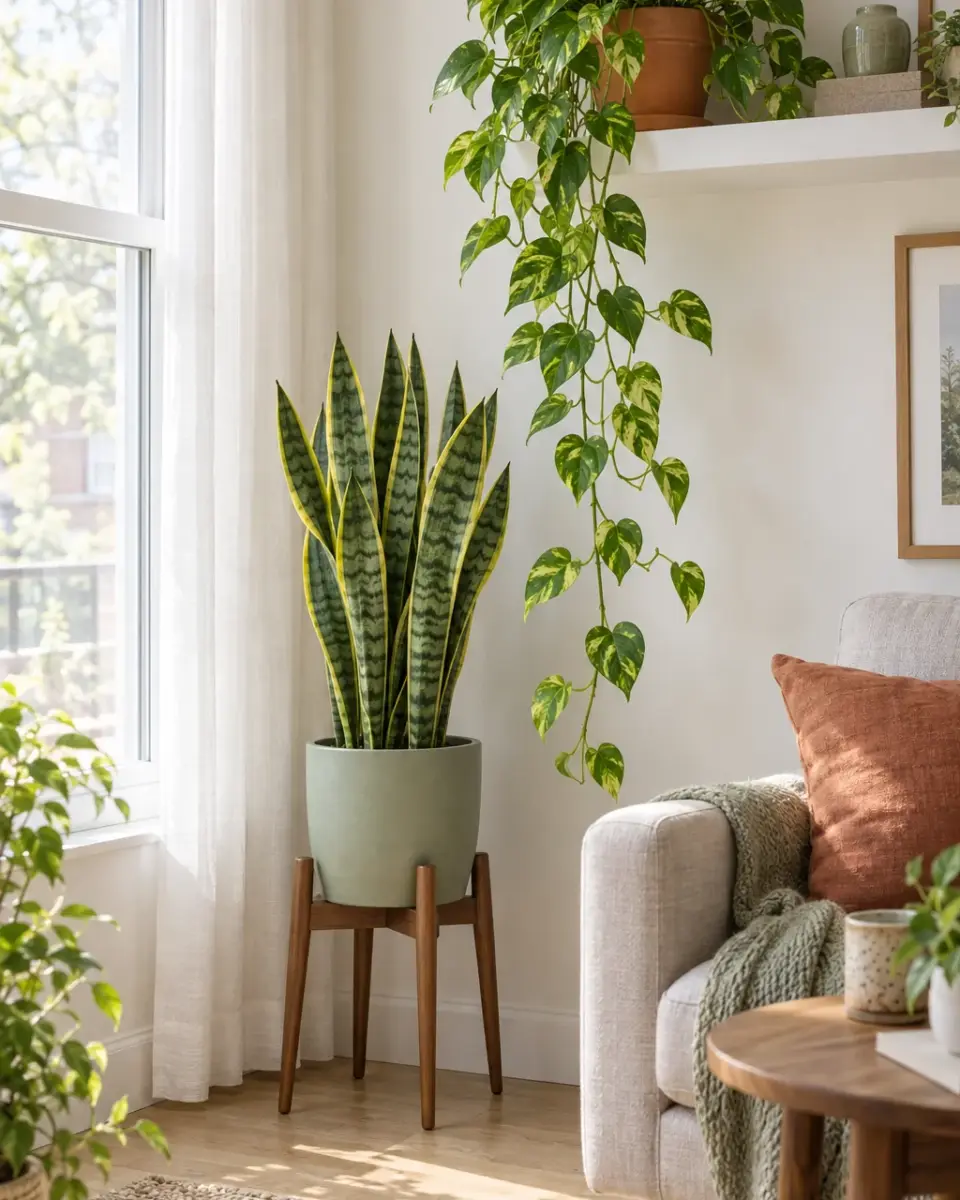
A plant on the floor below the windowsill gets less light than the same plant raised to sill height, so the best plant stand ideas solve a light problem as much as a style one. Mid-century stands with tapered wood legs suit an upright snake plant or ZZ plant; a stand 12 to 24 inches tall brings a medium plant to seated eye level. For scale, the stand and plant together should reach at least the height of nearby furniture, so the plant doesn’t look stranded next to the sofa.
Tiered and ladder stands
Tiered stands hold several plants in a small footprint. Place one beside your brightest window, with the most light-hungry plants on the top tiers and closest to the glass, and tolerant ones lower and toward the back. Ladder-style stands lean against the wall and take even less floor space.
Tables, consoles and nightstands
Tabletops are the easiest display spots, and the easiest to overdo. One medium plant or a tight cluster of small pots on a tray looks more intentional than scattered pots, and the tray protects the finish. Keep the plant’s spread to about a third of the tabletop so it still works as a table.
Entry consoles are usually far from windows, where a cast iron plant or ZZ plant copes far better than a fern. On a coffee table near a window, choose something low enough to see over, like a compact pothos in a wide, shallow pot.
Baskets: woven texture without water damage
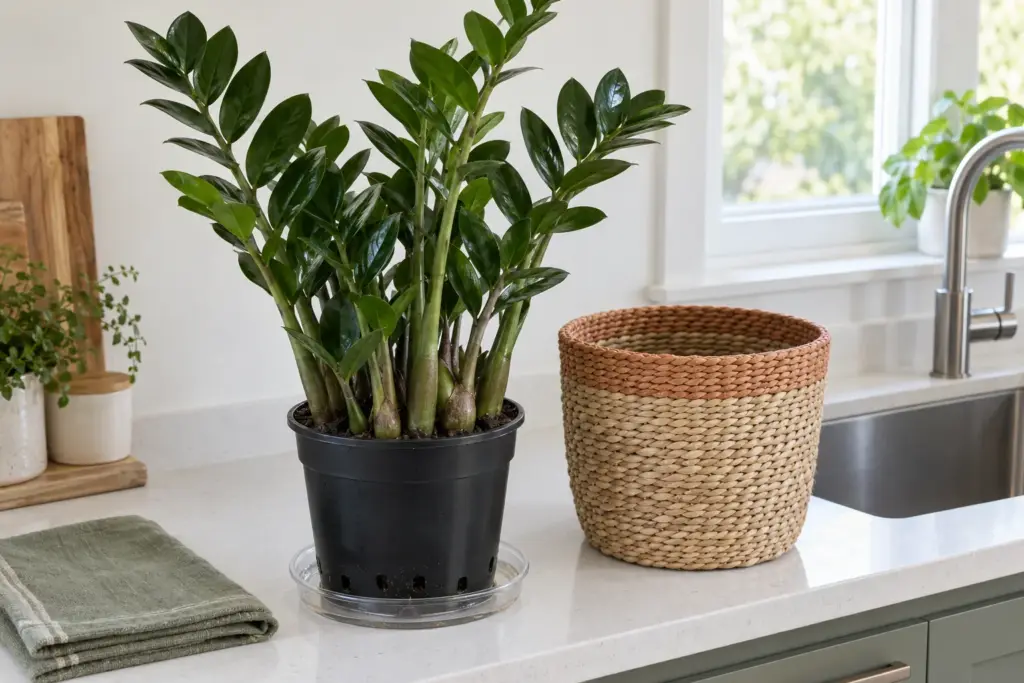
Seagrass, rattan and wicker baskets add warmth, but they have no drainage and aren’t waterproof, so treat them as cachepots, the decorative outer layer. Penn State Extension recommends keeping the plant in a container with a drainage hole, slipping it into the decorative one, adding a plastic saucer if needed and leaving space below the drainage hole so water can drain freely.
The simplest routine: lift the nursery pot out, water it in the sink, let it drain completely and set it back. Remove any standing water from the bottom of the basket, because waterlogged soil invites root problems. If the basket is deeper than the pot, prop the pot up on an upturned saucer so the plant sits level with the rim.
Hanging planters for vertical space
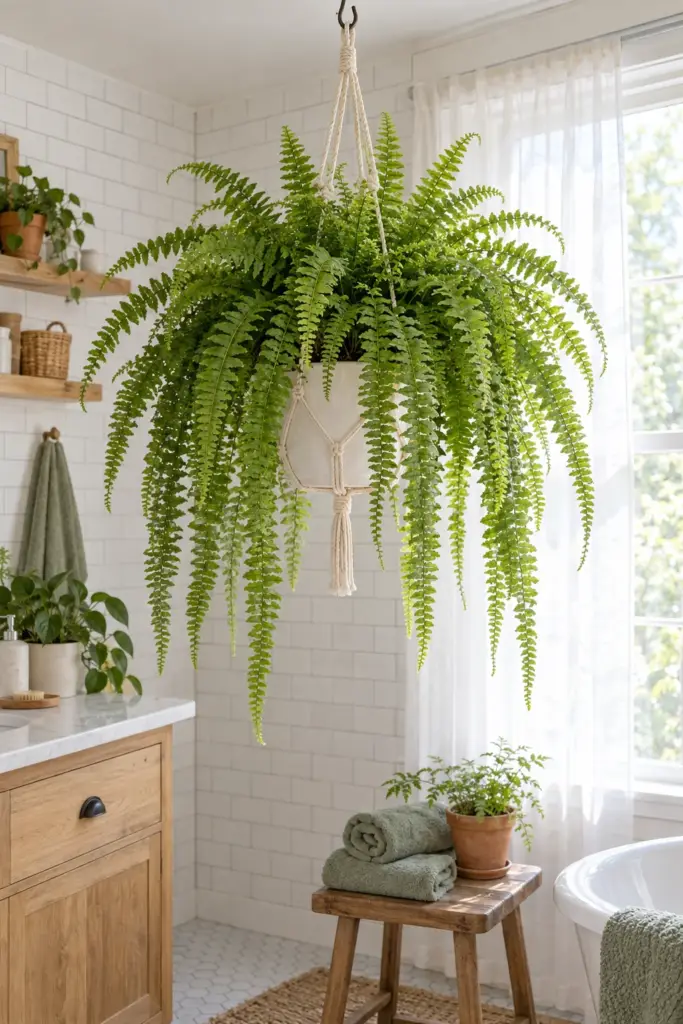
Hanging plants indoors free up floors and surfaces, ideally in front of a window where they still get good light. A pothos spilling from a macramé hanger or a Boston fern (Nephrolepis exaltata) near a bright bathroom window are classic choices.
Two points matter more than the hanger itself. Hanging plants dry out faster because warm air rises, so check the soil more often. And a pot full of wet soil is far heavier than it looks. Screw the hook into a ceiling joist whenever you can; where there’s no joist, use a toggle bolt rated for the weight of the plant right after watering, not when it’s dry. Keep it away from air conditioning and heating vents.
Display ideas room by room
Living room
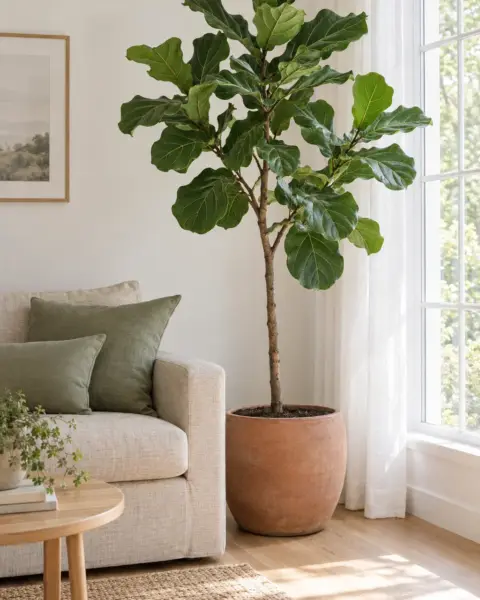
Usually the room with the biggest window, so it can hold your largest display. Pair a tiered stand by the window with a trailing plant on a nearby shelf; different heights lead the eye across the room.
Bedroom
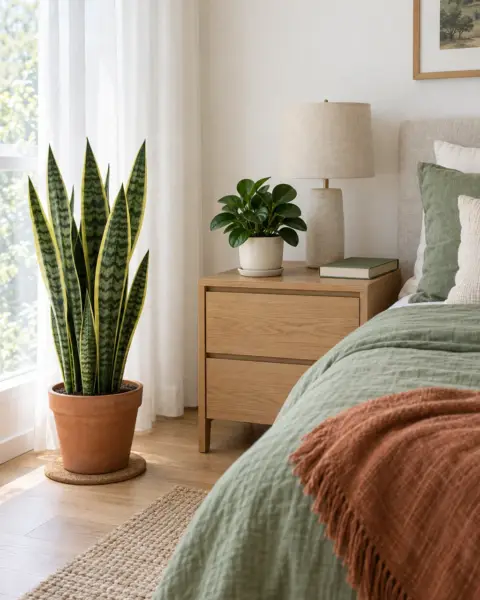
Bedrooms often face north or stay curtained. A snake plant or ZZ plant on a nightstand or dresser handles that light, and one or two plants read as calm where a crowded nightstand reads as storage.
Kitchen
A sill above the sink in a south- or west-facing kitchen suits small succulents. Pothos trailing from an open shelf softens cabinets, as long as it isn’t above the stove: hot spots are hard on houseplants.
Bathroom
Bathroom humidity helps tropical plants, but many bathrooms lack light. A Boston fern does well near a window with bright, indirect light; a windowless bathroom only works with an added light. Grouping a few plants also raises the humidity around them a little.
Home office and entryway
A snake plant on a desk corner takes little space. In an entryway, a cast iron plant in a tall ceramic planter fills a dim corner most plants would reject.
Match the display to your interior style
Indoor plant decor changes completely with the materials around the plants. To choose pot colors and group plants by height first, see how to style indoor plants around your home.
Scandinavian and minimal: white or pale gray ceramic, light oak stands and fewer, sculptural plants. One snake plant on a wooden stand says more than ten small pots.
Boho: rattan baskets, macramé hangers and layers of trailing greenery, with a nursery pot and saucer inside every woven piece.
Mid-century modern: tapered wood legs, walnut tones and solid ceramic in mustard, sage or white, with upright plants like a ZZ plant.
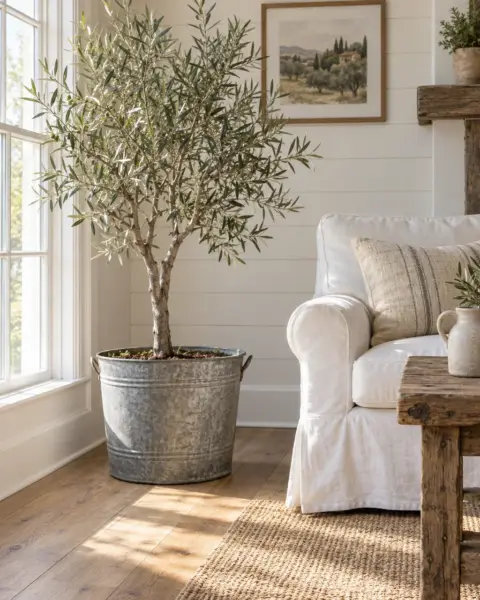
Modern farmhouse: terracotta, galvanized metal and small pots grouped on a wooden tray.
Industrial: black metal shelving and concrete planters. Dark walls reflect less light, so keep plants closer to the window than in a white room.
Care notes for a styled plant display
- Group by needs, not just looks. Plants sharing a shelf should want similar light and watering, so one routine works for all.
- Turn the pots. Plants lean toward the window. A quarter turn each time you water keeps them growing evenly.
- Leave access. A plant you can’t reach easily gets watered less.
- Think about pets. Pothos and snake plant are toxic to cats and dogs, while Boston fern is listed as non-toxic, according to the ASPCA toxic and non-toxic plant list. High shelves and hanging planters keep toxic plants away from dogs, but cats climb, and trailing vines can dangle within reach.
FAQ: houseplant display questions about shelves, baskets and hanging pots
What are the best houseplant display ideas for a small apartment?
Go vertical. Wall shelves, a ladder or tiered stand by the brightest window and one or two hanging planters add greenery without taking floor space. Match each plant to its spot’s light, since small apartments often have only one or two good windows.
Can a plant go straight into a basket with soil?
It’s better not to. Keep the plant in a pot with a drainage hole, set it inside the basket on a plastic saucer, and lift it out to water. Empty any water that collects at the bottom.
How high should a hanging planter go?
Outside the walkway, at a height where you can see and reach the soil. Plants near the ceiling sit in warmer air and dry out faster, so a pot a little above eye level near a window is usually most practical.
Do plants on a bookshelf get enough light?
Only if the bookshelf is close to a window. A shelf across the room is low light at best, so choose tolerant plants like pothos, snake plant or ZZ plant and expect slower growth.
Quick recap for your next houseplant display
- Check the light in each spot first: distance from the window matters more than the furniture.
- Use shelves and hanging planters for trailing plants, stands to lift plants toward the light, and tables for one plant or a tight group.
- Keep plants in pots with drainage holes inside baskets and cachepots, and empty standing water.
- Anchor hanging planters into a joist, or use a toggle bolt rated for the wet weight.
- Turn pots regularly and group plants with similar needs.
Pick one spot this week, match a plant to its light and build from there. Good houseplant display ideas come together one shelf at a time. If a tricky corner has you stuck, send your question through the Contact page.