A plant on the bookshelf, two on the floor, one squeezed onto the windowsill. Each looked great at the store, yet together they read as clutter. Good plant styling fixes that with two habits: putting each plant where its light works, and grouping plants on purpose.
The indoor plant styling ideas below work right away. Each names the plant, height, pot and light that make it succeed, so pick two or three and try them this weekend.
Indoor plant styling ideas start with the light you have
A south window gives the strongest light, east and west windows sit in the middle, and a north window counts as low light. Light also fades fast with distance: spots more than 8 to 10 feet from a window, like corners, bookcases and tables, are hard on most plants.
1. Anchor a living room corner with one statement plant
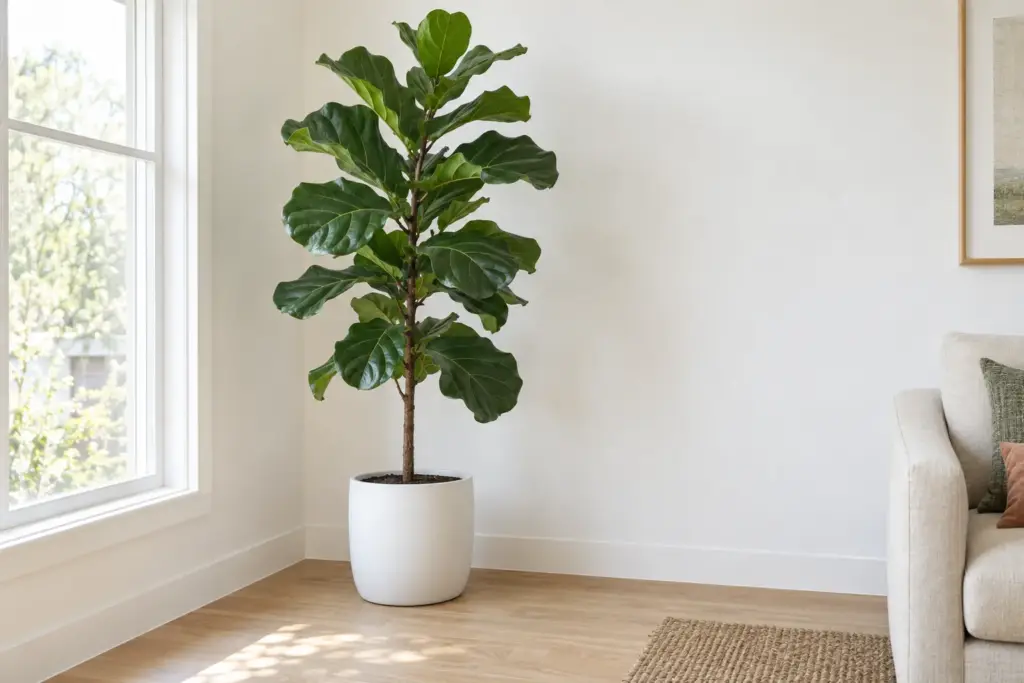
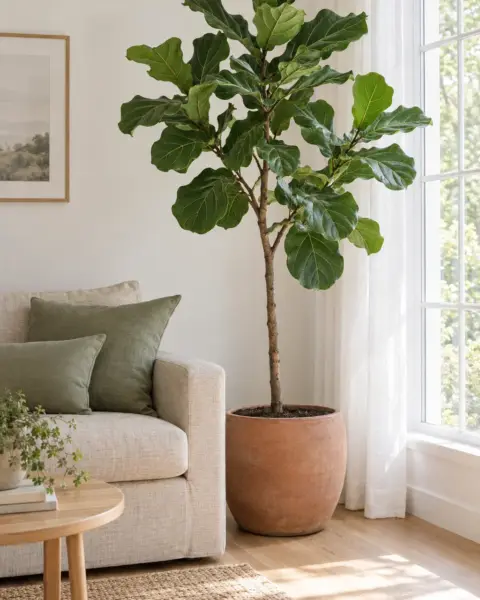
One tall plant turns an empty corner into a focal point. Near a bright window, a fiddle-leaf fig, with violin-shaped leaves up to 18 inches long, is the classic pick. It drops leaves in dim spots or when moved often, so settle it once. For a darker plant corner in the living room, use a snake plant or ZZ plant.
2. Group plants in odd numbers
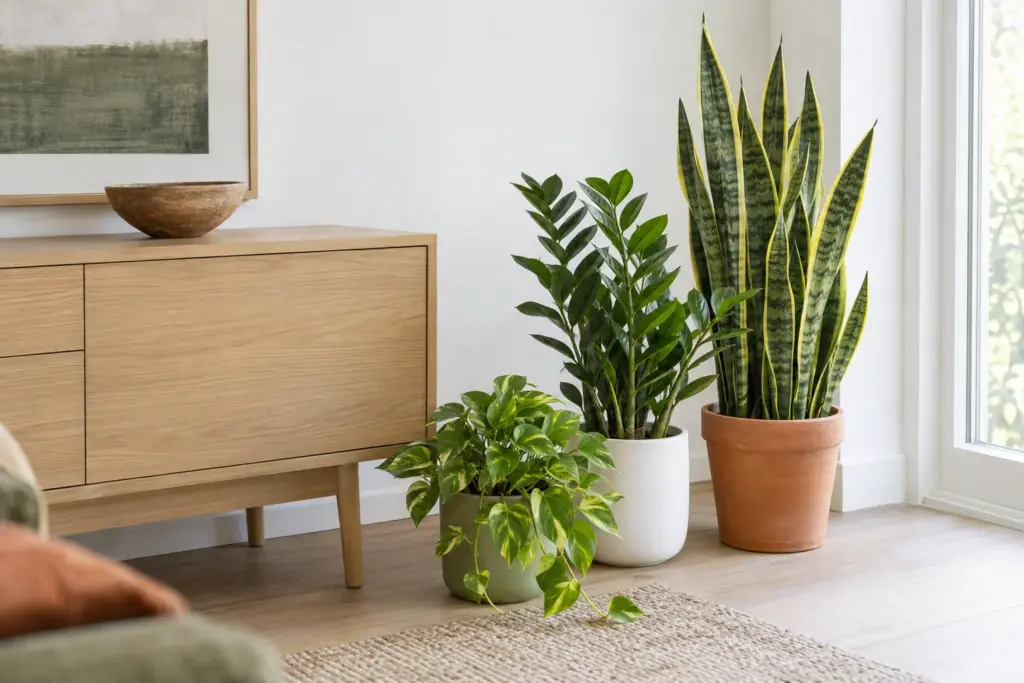
Three plants of different heights look deliberate, while a pair can look staged. Groups of three or five keep the eye moving. Keep plants with the same light and watering needs together so care stays simple. For the full method, from height steps to pot colors, see this step-by-step guide to styling indoor plants.
3. Play with heights on a plant stand
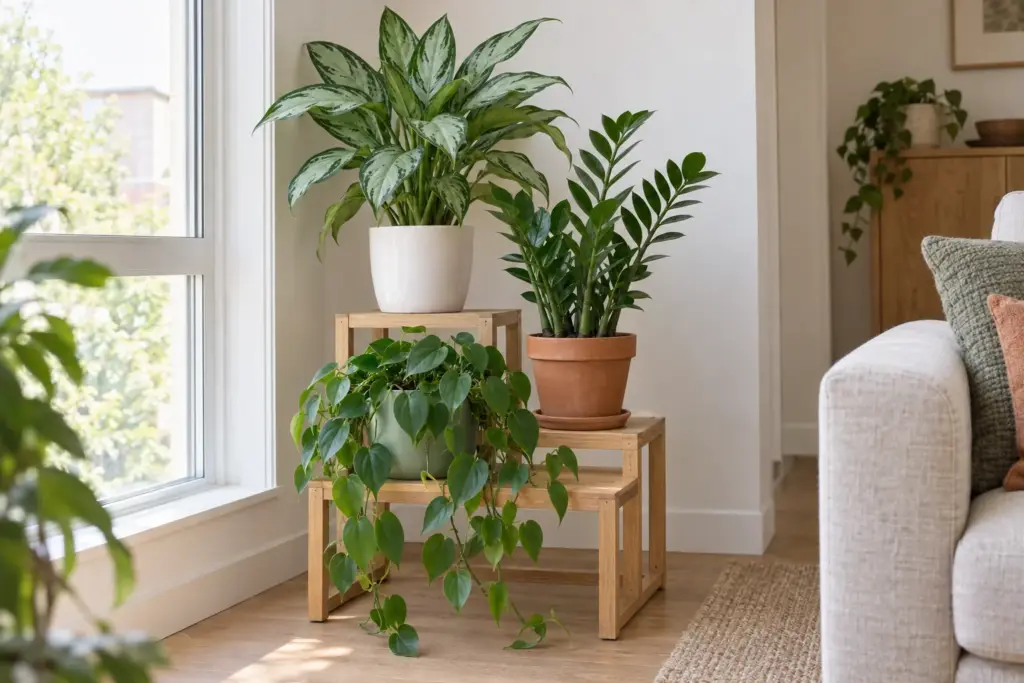
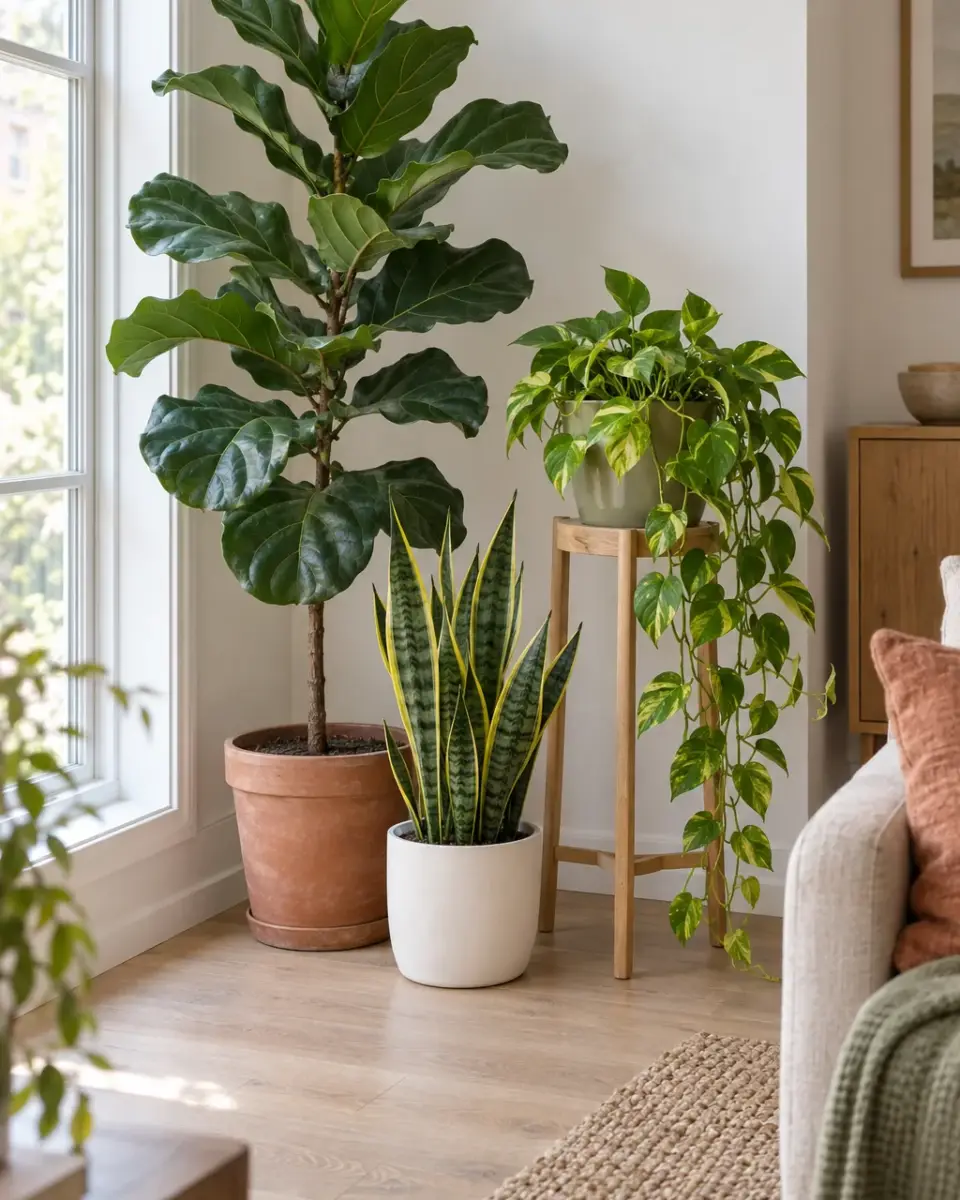
When every pot sits on the floor, a group looks flat. Lift one or two plants on a plant stand so leaves layer tall in back, medium in the middle and trailing in front. Check the stand’s weight limit against a freshly watered pot.
4. Turn a ladder shelf into a vertical garden
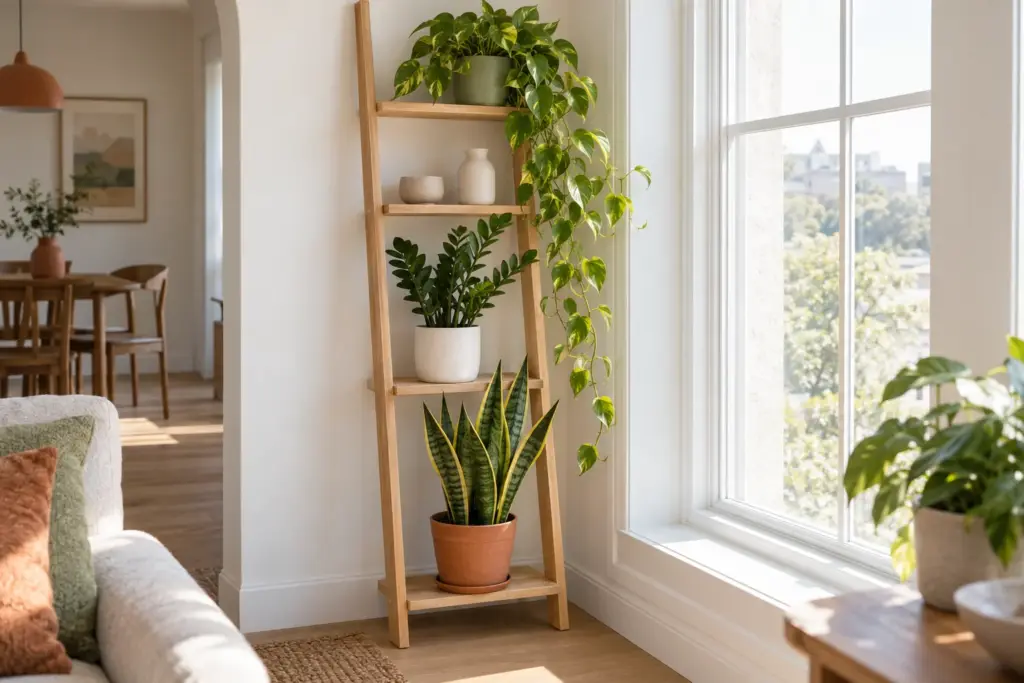
A leaning ladder shelf fits a narrow wall. Put heavier upright plants on the wide bottom rungs and a trailing pothos on top, where vines fall freely. Since light drops within a few feet of the glass, stand the ladder right beside a window.
5. Hang plants from the ceiling

Hanging plants indoors free up surfaces and pull the eye upward. Screw the hook into a ceiling joist, because plastic drywall anchors can pull straight out, and choose a hook rated for the pot’s wet weight. Spider plants and pothos trail beautifully from a basket near a window.
6. Add a shelf above the doorway

A narrow shelf over a door makes easy above doorway decor. Light up there is usually low, so choose heartleaf philodendron, which tolerates low light very well, or pothos. Anchor the brackets into studs, use pots with liners and lift plants down to water.
7. Let vines spill from floating shelves
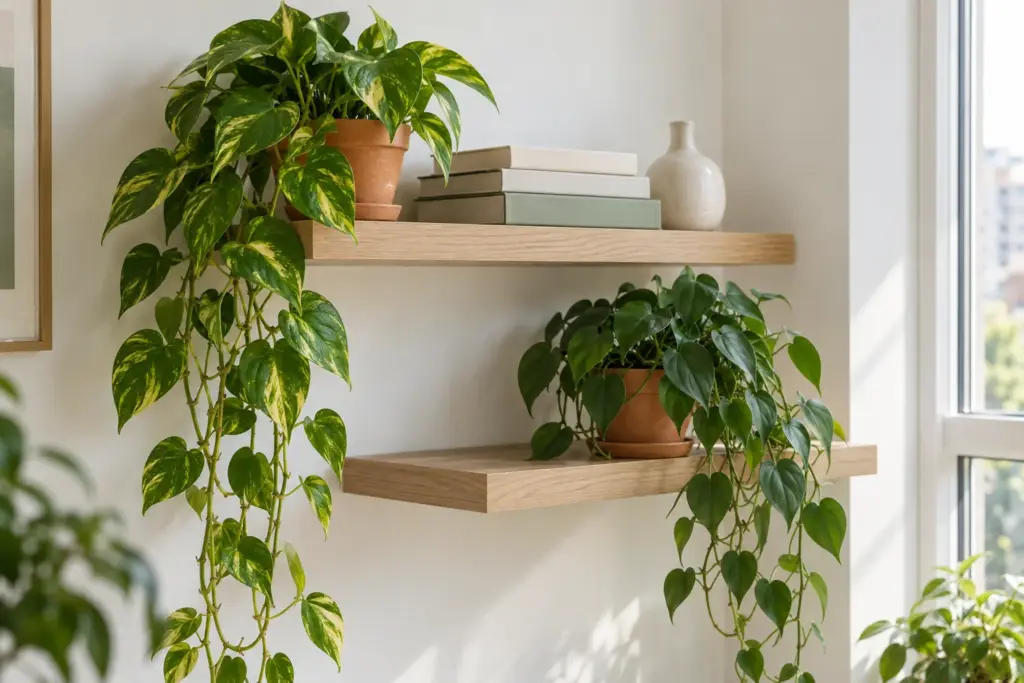
Floating shelves with plants are one of the simplest plant wall shelf ideas. Stagger two or three shelves beside a window and let vines trail from one shelf past the next. Heartleaf philodendron leaves stay small, about 2 to 5 inches, so shallow shelves never look heavy.
8. Pick one pot palette
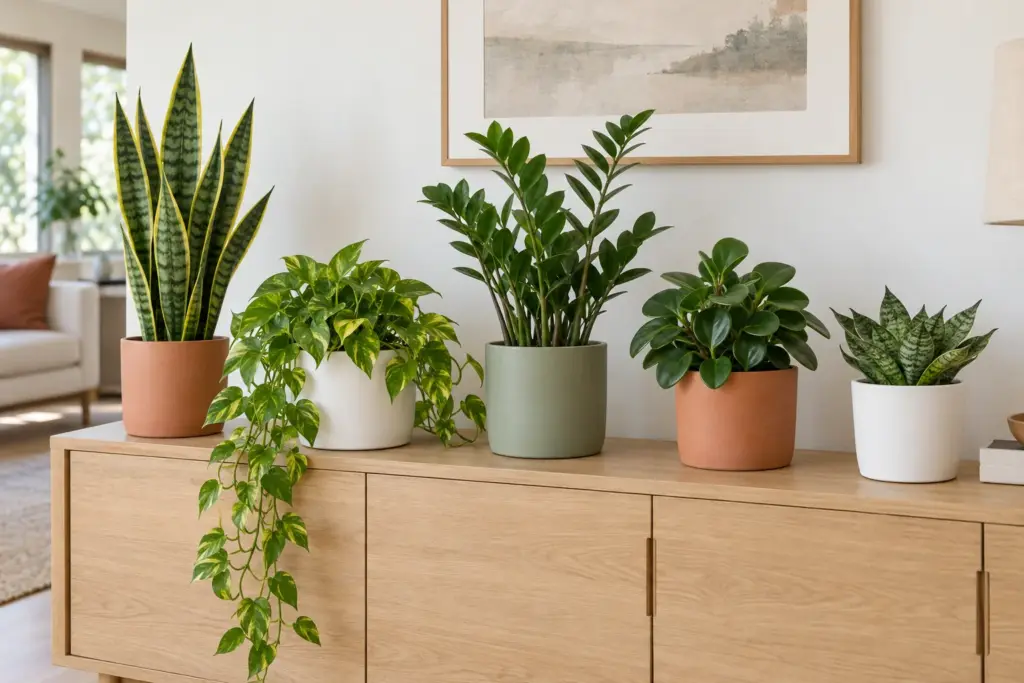
Choose two or three tones, such as terracotta, white and soft sage, and repeat them everywhere. Keep each plant in its plastic nursery pot inside a decorative cachepot, and you can change the look without repotting.
9. Mix leaf textures
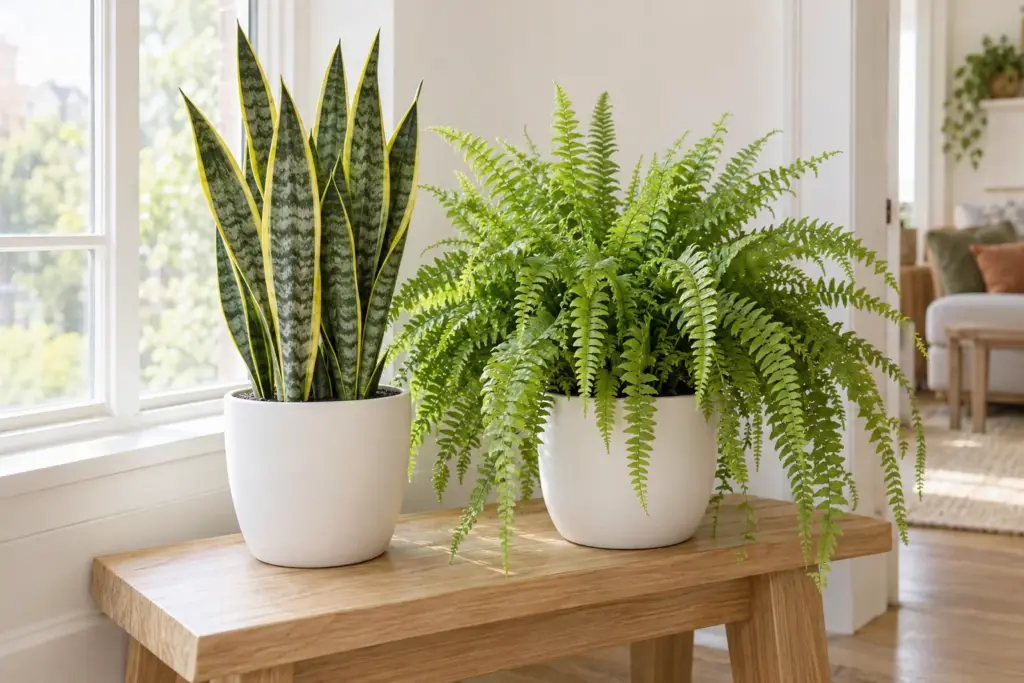
Similar leaves blur into one green blob. Pair the stiff, upright swords of a snake plant with the feathery fronds of a Boston fern, or glossy ZZ leaflets with a spider plant’s arching leaves. Contrast gives indoor plants decor depth, as long as partners share similar light.
10. Style the windowsill
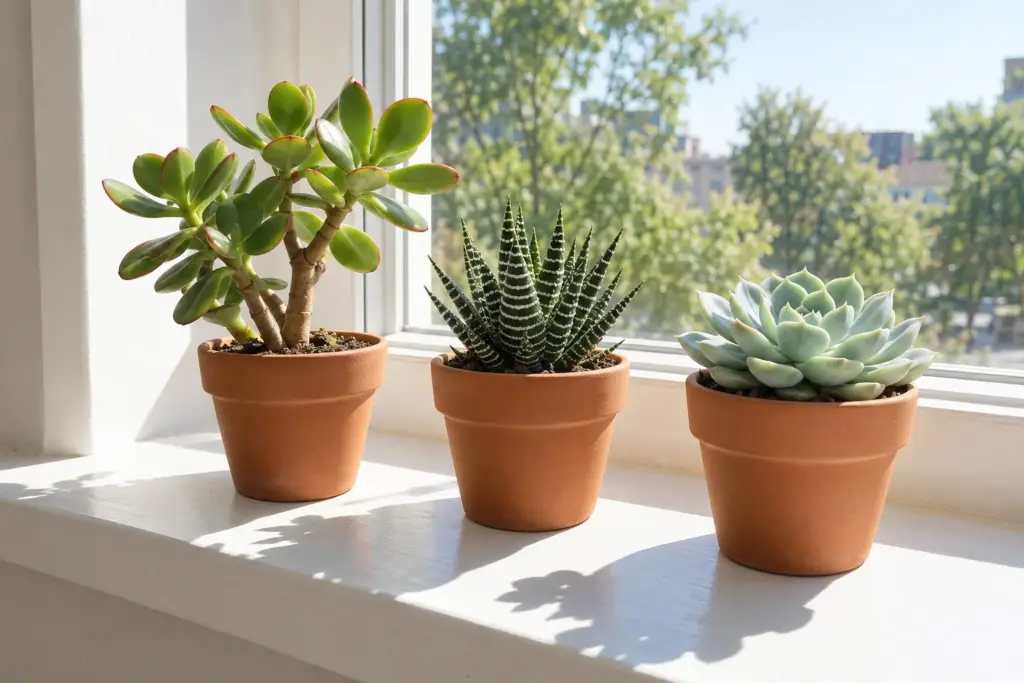
Treat a sunny sill like a display shelf: three small pots in one color, or one long planter. A bright south sill suits sun lovers like a jade plant, while a north sill calls for low-light plants. On cold nights, pull pots back from the glass.
11. Dress the coffee table
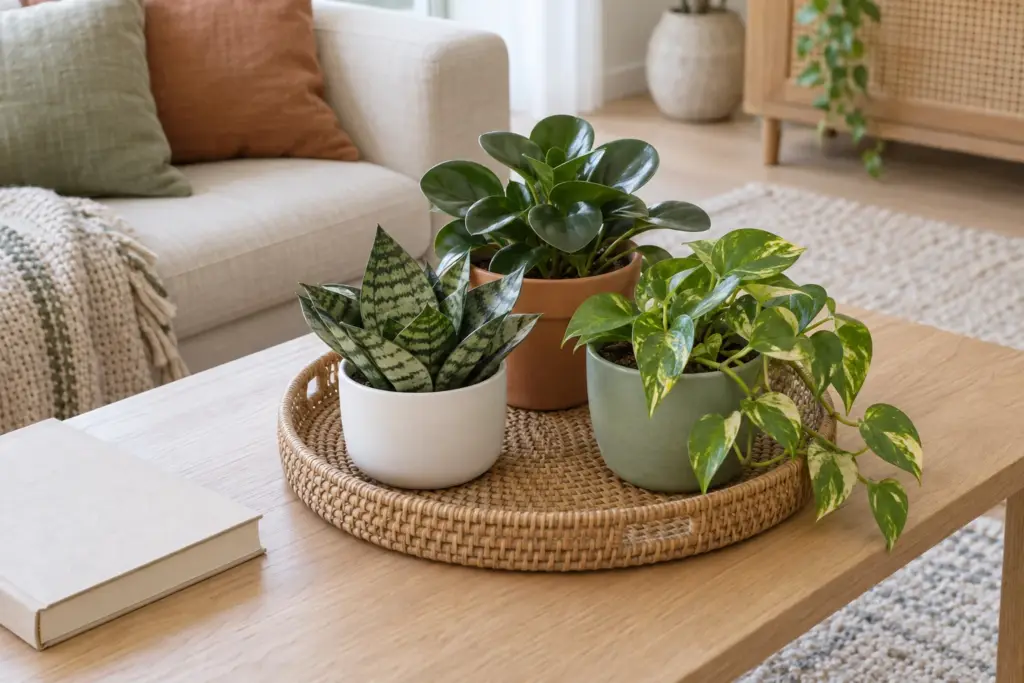
Keep coffee table plants low, like one compact plant in a wide bowl or a trio on a tray. Tables often sit far from windows, and extension guides suggest giving low-light plants 4 to 8 weeks in better light now and then, so swap the table plant every month or two.
12. Weave plants into a bookshelf
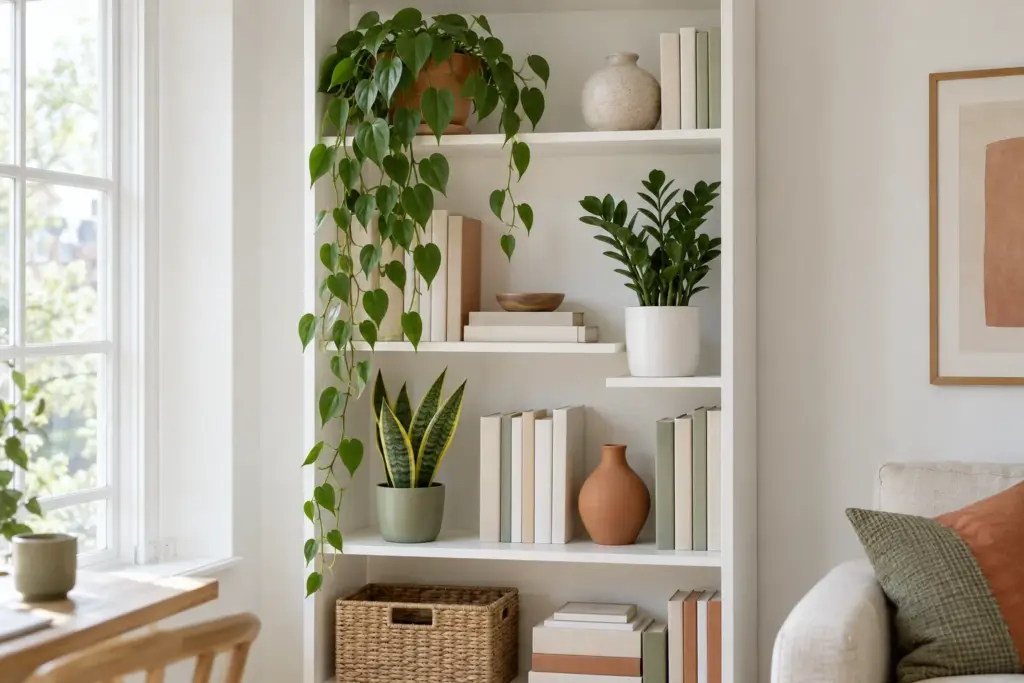
Zigzag plants across the shelves and let one vine drop from the top. Bookcases are usually dim, so pick ZZ plants, snake plants or heartleaf philodendron. University trials found ZZ kept producing new leaves in very dim indoor light for more than a year.
13. Bring ferns into the bathroom
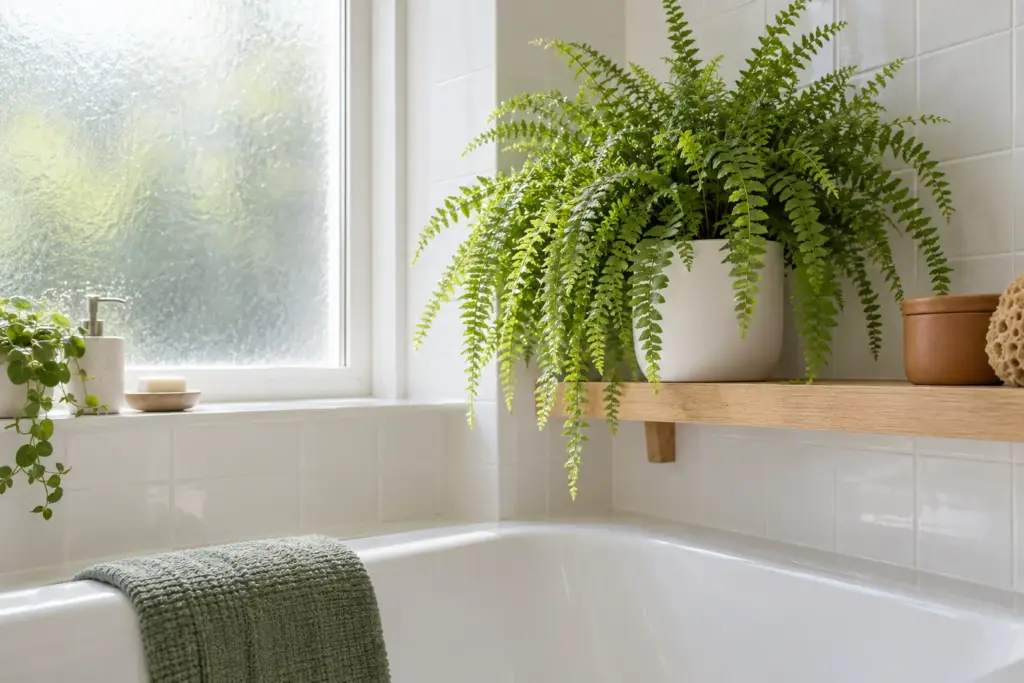
Ferns come from tropical forests where they grow in low light and high humidity, so a bathroom with a window suits them. Set a Boston fern on a shelf near the glass. Light, not steam, is the real limit, so a windowless bathroom needs a grow light.
14. Keep the bedroom calm
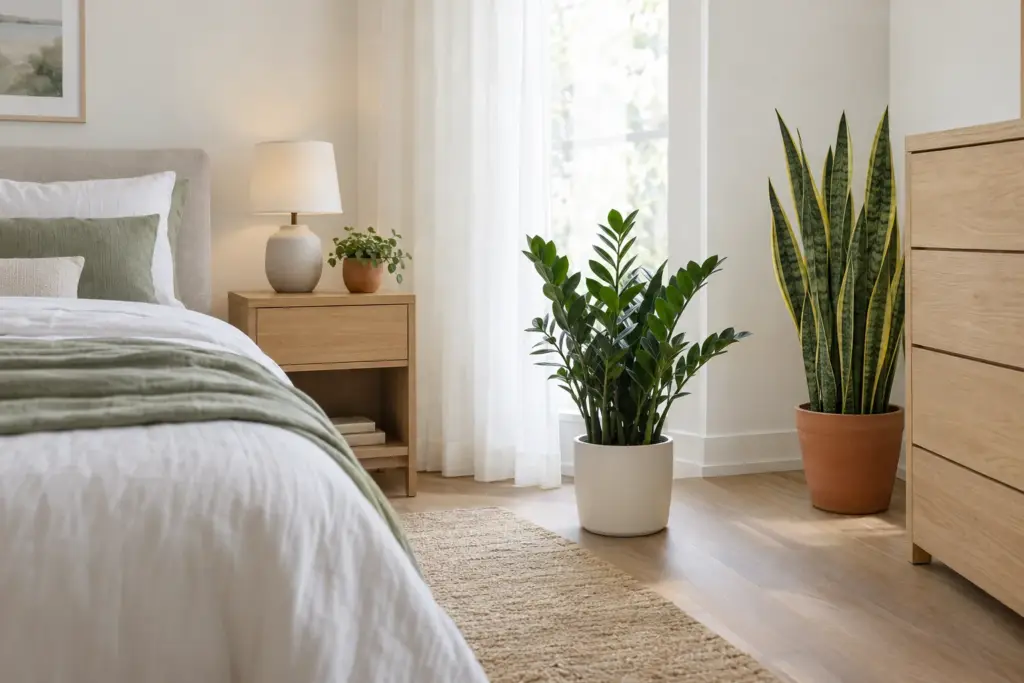
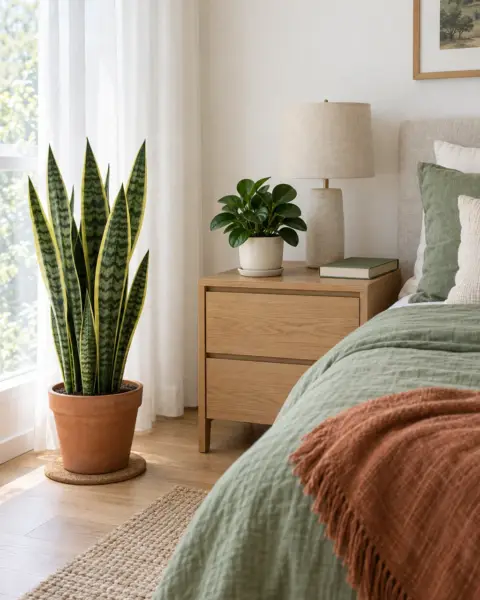
A few larger plants feel more restful than many small ones. A snake plant beside the dresser or a ZZ plant near the bed adds structure, and both cope with the low light many bedrooms get. Limit the nightstand to one small pot.
15. Grow herbs on the kitchen windowsill
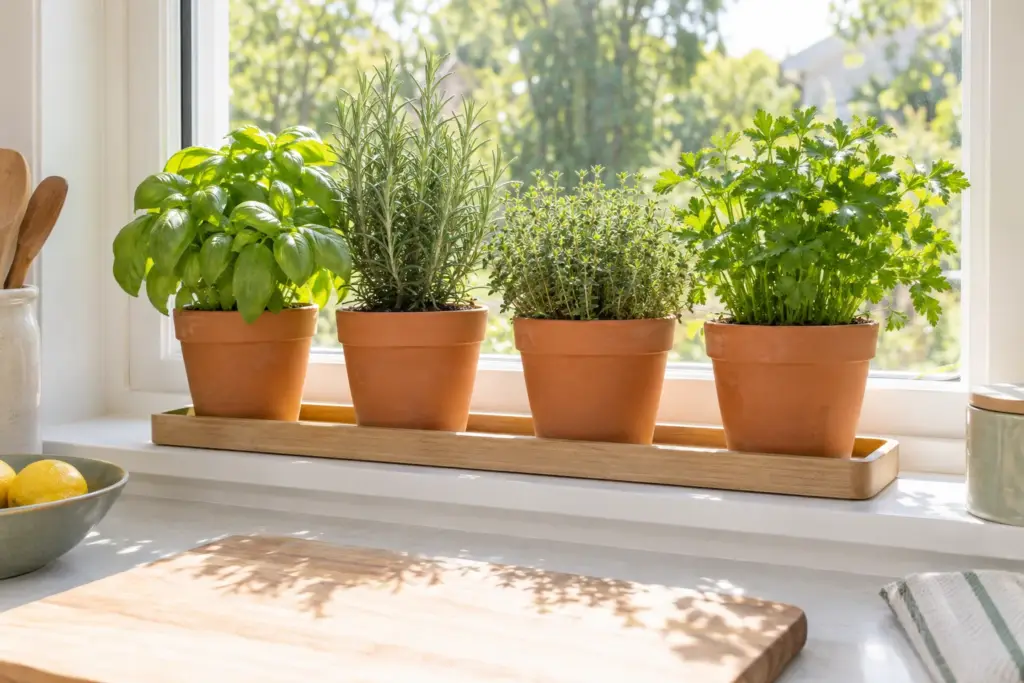
Herbs are sun lovers. Indoors, most need roughly 5 to 8 hours of direct sun a day, so a south window is best, with bright east or west windows next. Give each herb its own pot and line them up on a narrow tray.
16. Build a plant wall
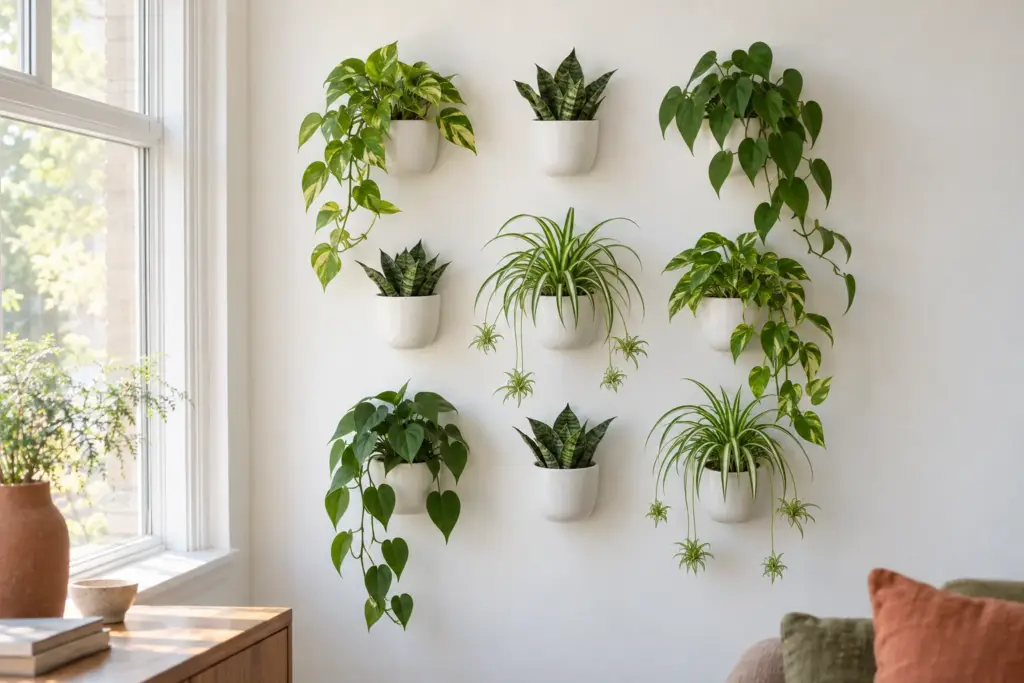
Mount a grid of small wall planters or narrow shelves beside a window, mixing trailing and upright plants. Leave a margin of bare wall around the edges to keep it from feeling crowded, and give every pot a liner.
17. Train a pothos to climb
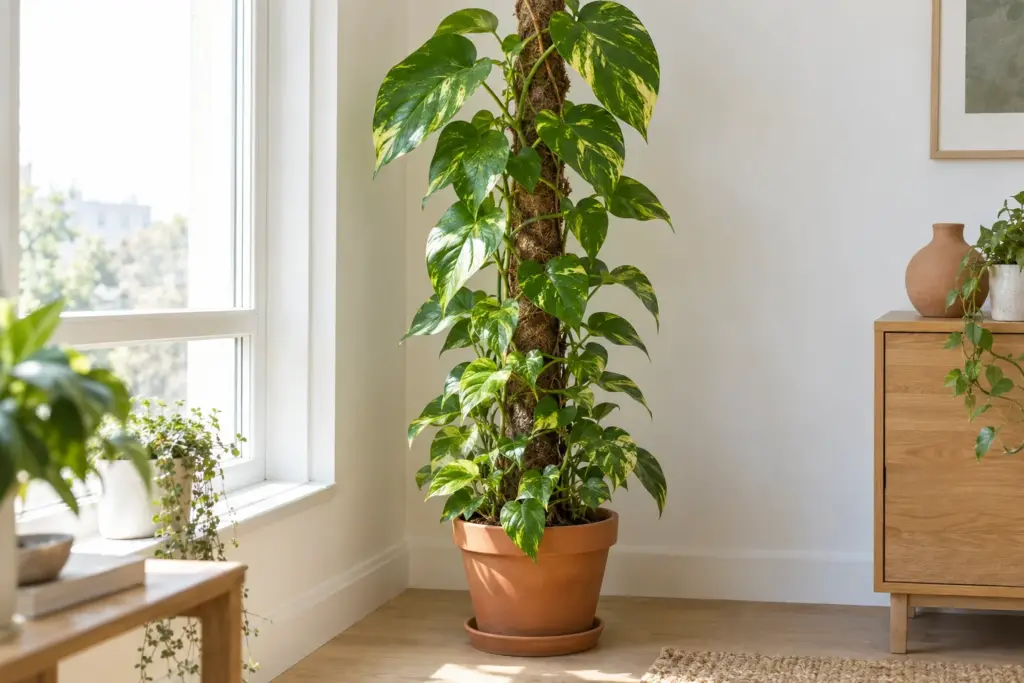
Pothos climbing ideas range from a moss pole in the pot to vines clipped along a window frame. Pothos climbs trees with aerial roots in the wild, and a slightly damp pole helps those roots grip. Climbing vines can grow noticeably larger leaves, given enough light.
18. Frame the sofa or TV
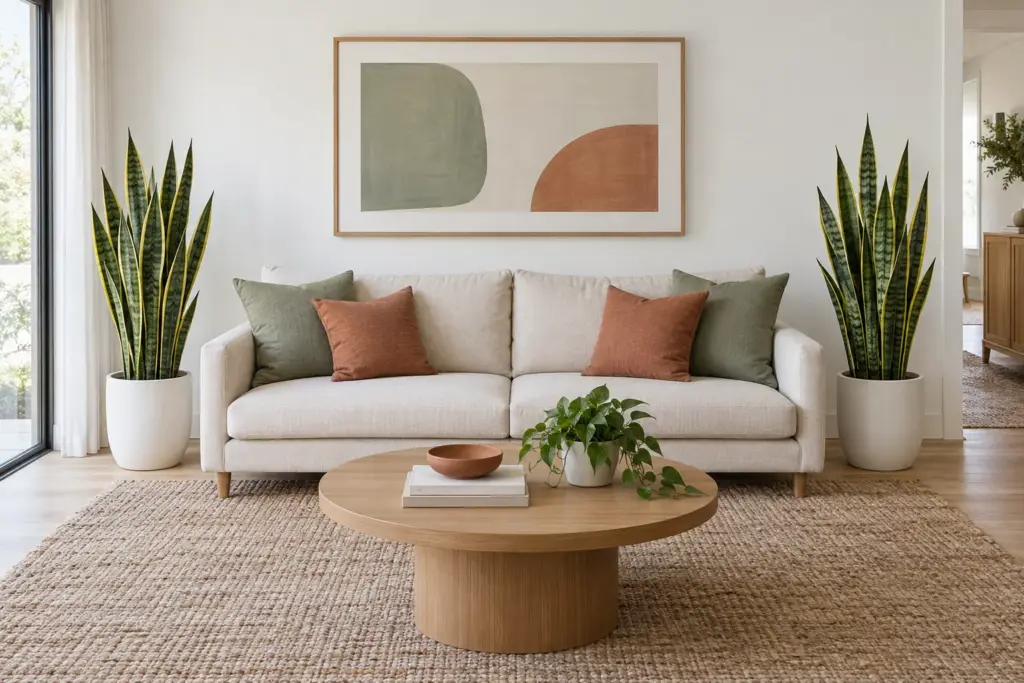
Matching tall plants on each side of a sofa or media console create symmetry, the one case where a formal pair beats an odd group. TV walls often sit far from windows, so snake plants or ZZ plants are the reliable picks there.
19. Welcome guests at the entryway
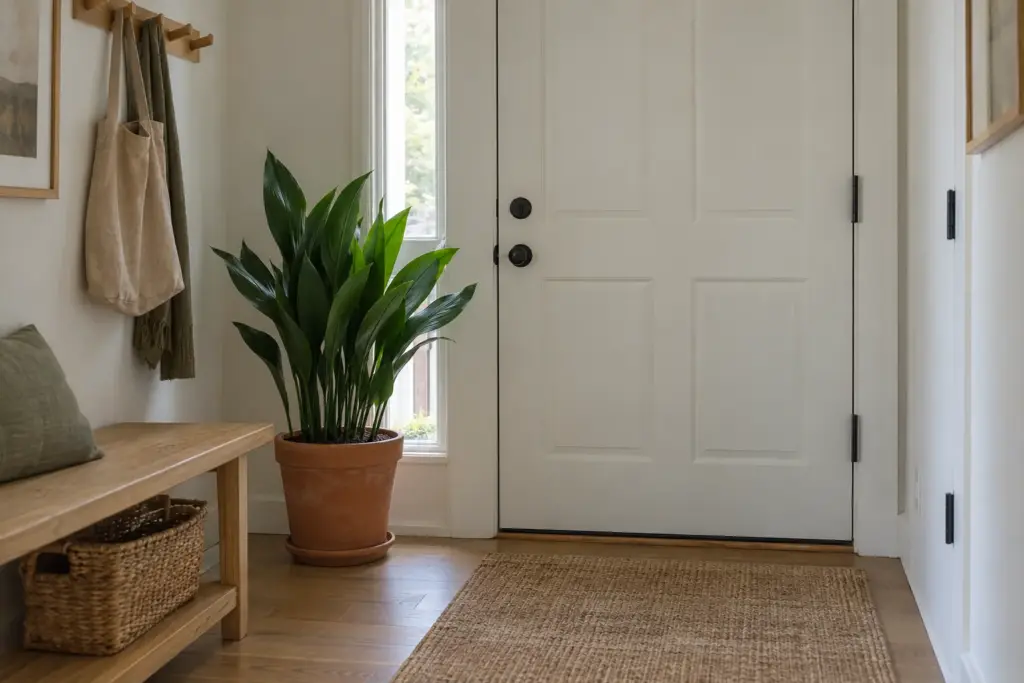
A floor pot by the door sets the tone for the home. Entryways tend to be dim, so choose a ZZ plant, snake plant or cast iron plant, all known for tolerating low light. Keep it clear of the door’s swing.
20. Put plants on a rolling cart
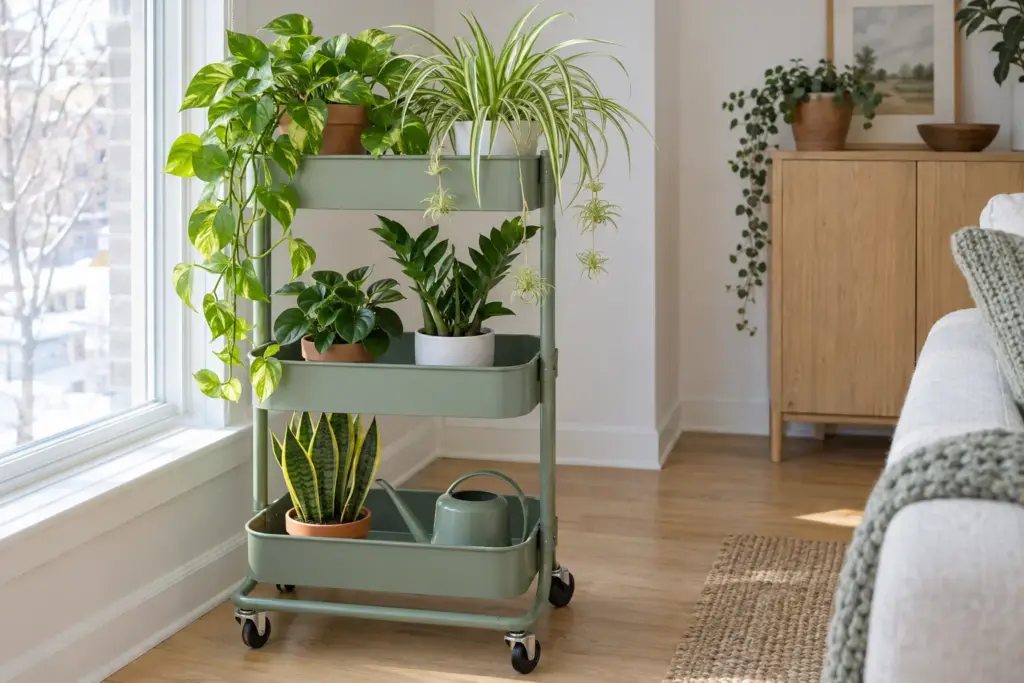
A three-tier rolling cart is a plant stand that follows the light. In winter, when days are shorter and light fades quickly away from the glass, roll it up to the window. Its trays double as saucers for potted plants indoors.
21. Double the green with a mirror
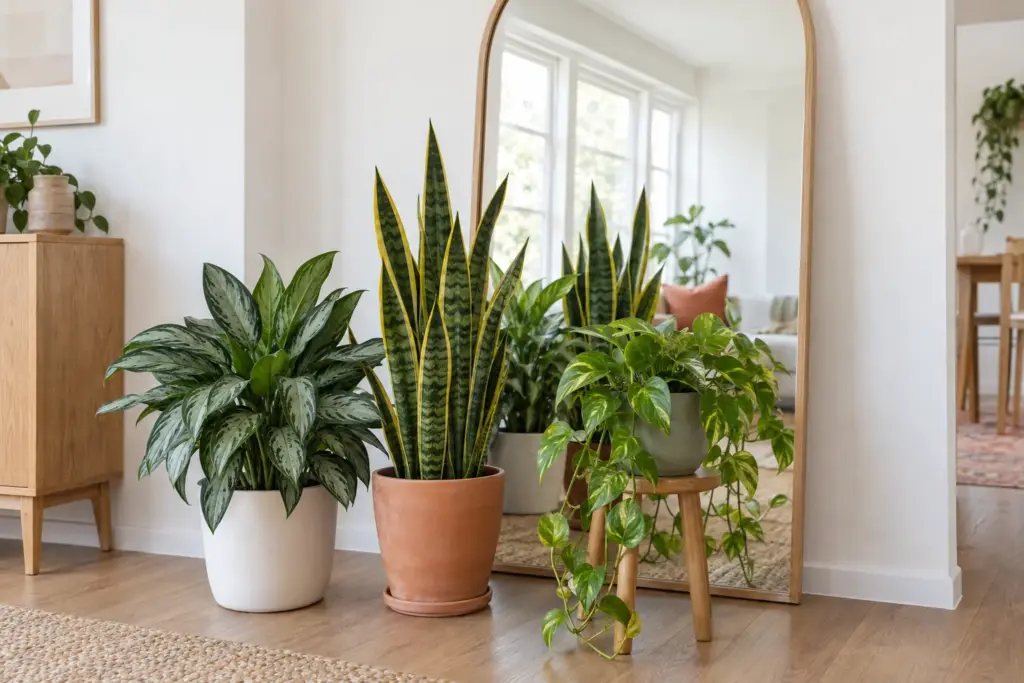
A large mirror behind a plant group makes the greenery look twice as full. Angle it to reflect the plants. A mirror won’t make a dim corner bright, though, so still choose plants for the real light.
22. Go boho with macramé hangers
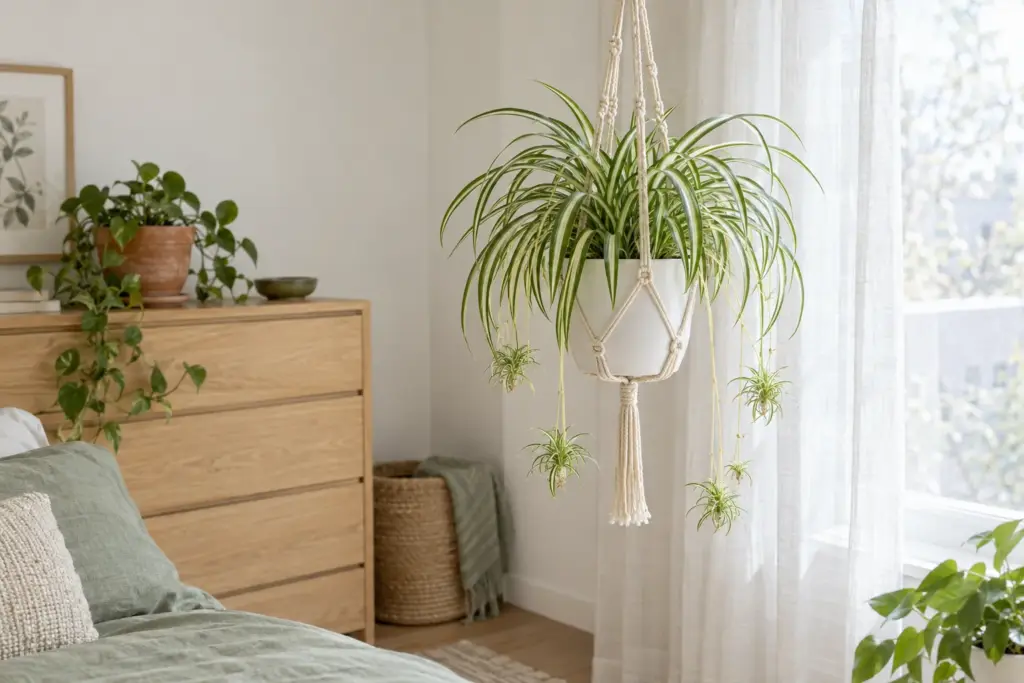
Macramé hangers add texture and a relaxed mood. Spider plants are the classic fill, with arching striped leaves and dangling baby plantlets, and the ASPCA lists them as non-toxic to cats and dogs. Hang two or three at staggered heights in light plastic pots.
23. Let one sculptural plant carry a minimalist room
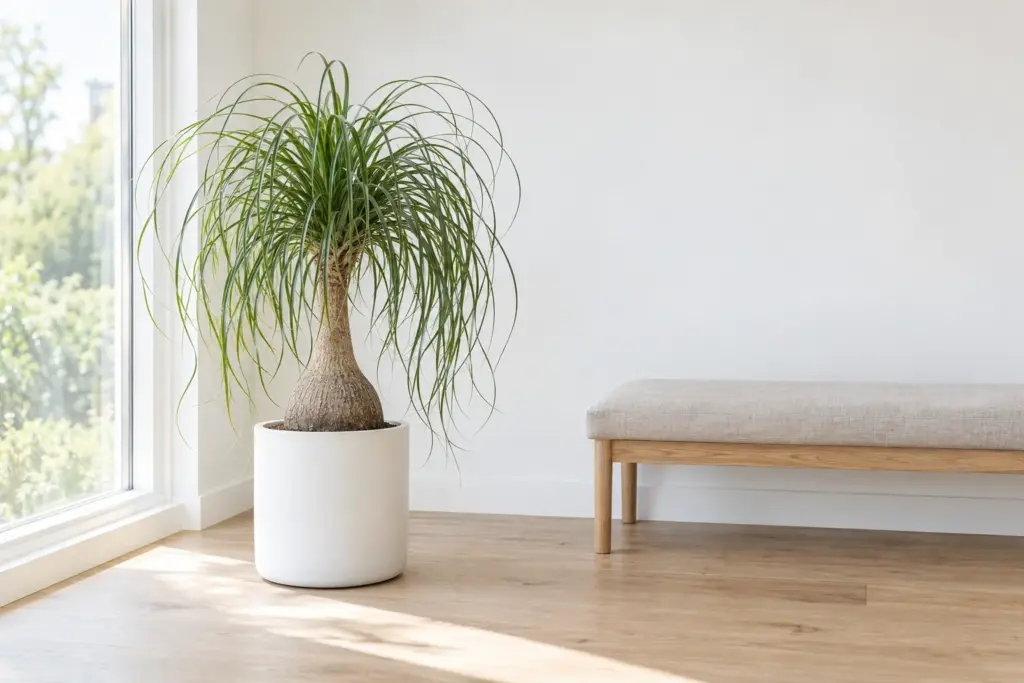
A minimalist room needs one strong shape, not a crowd. A snake plant’s upright swords or a ponytail palm’s fountain of narrow leaves reads like sculpture in a plain pot. The ponytail palm needs bright light; the snake plant handles much less. Open space completes the house plants aesthetic.
24. Create a plant corner in three levels
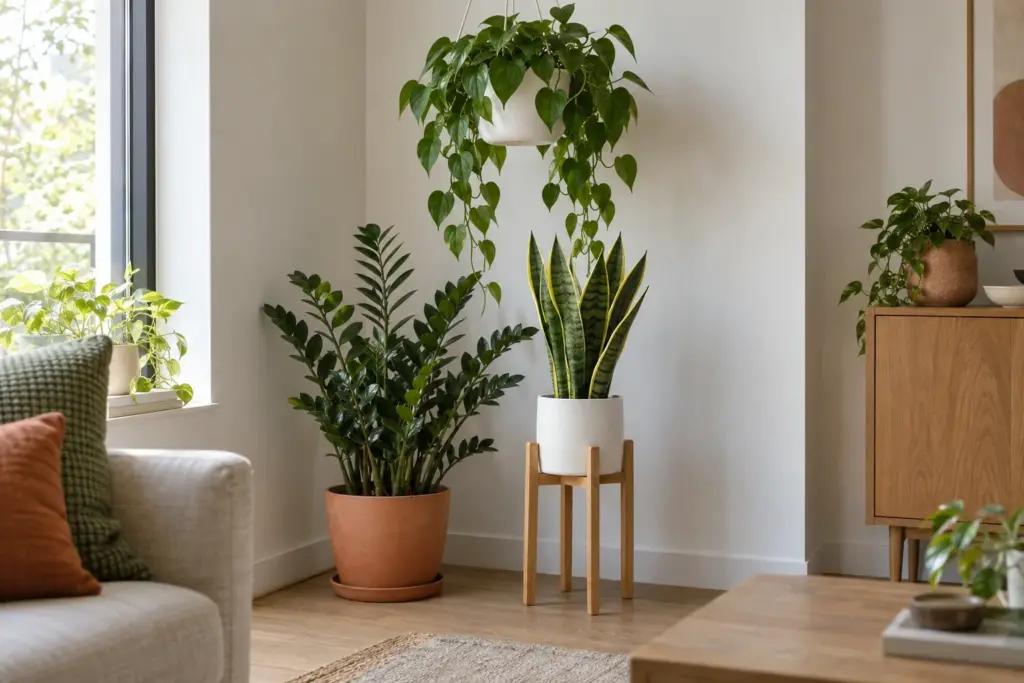
Stack a tall floor plant at the back, a medium plant on a stand in front and a trailing plant hanging above, all suited to the same light. Bright corner: fiddle-leaf fig, spider plant, pothos. Dim corner: ZZ plant, snake plant, heartleaf philodendron.
25. Light up a dark corner with a grow light
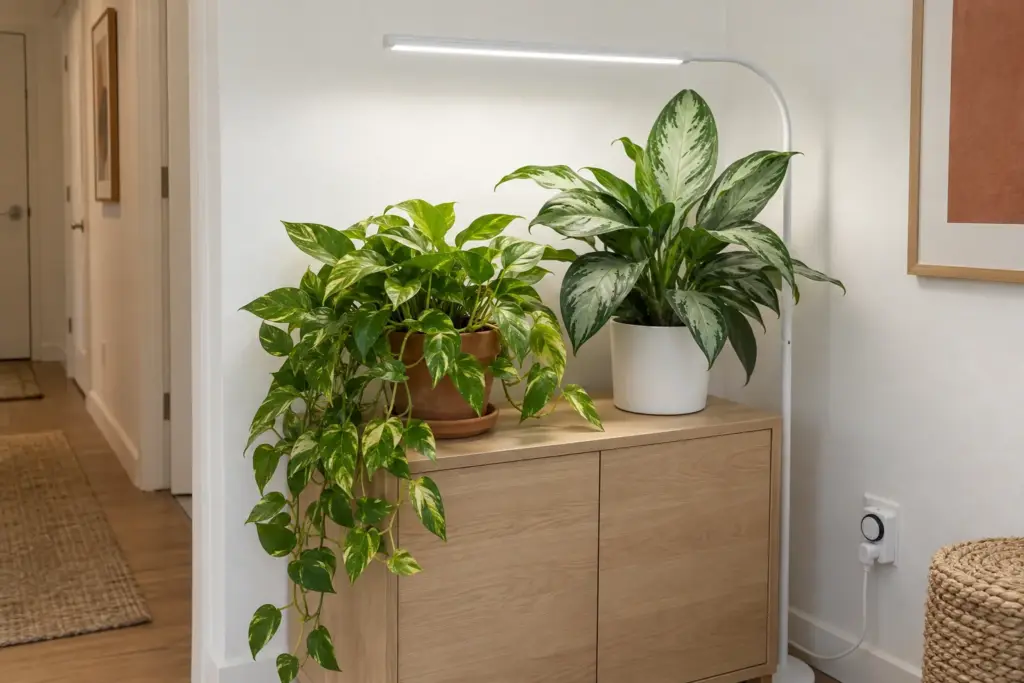
When the perfect spot has no window, a grow light makes plants possible. Choose white light so it blends in, and use a timer: extension sources suggest about 12 to 14 hours a day, because plants need darkness too. This beginner’s guide to plant lights covers distance and setup.
Quick rules for plant styling that lasts
- Light first. Place each plant for its light, then style around it.
- Repeat plants. The same species two or three times in a room creates rhythm.
- Leave breathing room. Open space between groups keeps clutter away.
- Turn the pots. Plants lean toward the window, so give each pot a quarter turn when you water.
FAQ: plant styling questions about numbers, picks and dim rooms
How many plants should one room have?
There’s no magic number. Start with one statement plant and one group of three, live with it for a week, then add. You have enough when surfaces still have open space and every plant sits in light it can use.
Which plants work best for these indoor plant styling ideas?
Plants with a clear shape and easy care. Snake plants and ZZ plants give upright structure, pothos and heartleaf philodendron add trailing lines, and a fiddle-leaf fig fills a bright corner. Choose by light first, then shape.
How do you keep plants from looking cluttered?
Group plants instead of scattering them, and keep pots to two or three colors. Vary heights within each group and leave some surfaces completely empty.
Can you style plants in a room with little light?
Yes, within limits. ZZ plants, snake plants, heartleaf philodendron and Chinese evergreen tolerate low light, though they grow slowly there. For anything hungrier, add a grow light or rotate plants into a brighter room for a few weeks at a time.
Quick recap
- Check the light in each spot before you bring home or move a plant.
- Anchor each room with one statement plant, then add a group of three.
- Vary heights with stands, shelves and hangers.
- Keep pots to two or three colors and leave breathing room.
- Turn pots as you water and rotate plants out of dim spots.
The best indoor plant styling ideas all come down to light first and restraint second. Stuck on a tricky corner? Write through the Contact page.